Chennai-based Sri Bhavani Tyres is planning to enter niche retreading segments, such as solid tyres and aircraft tyres.
Sri Bhavani Entering New Segments
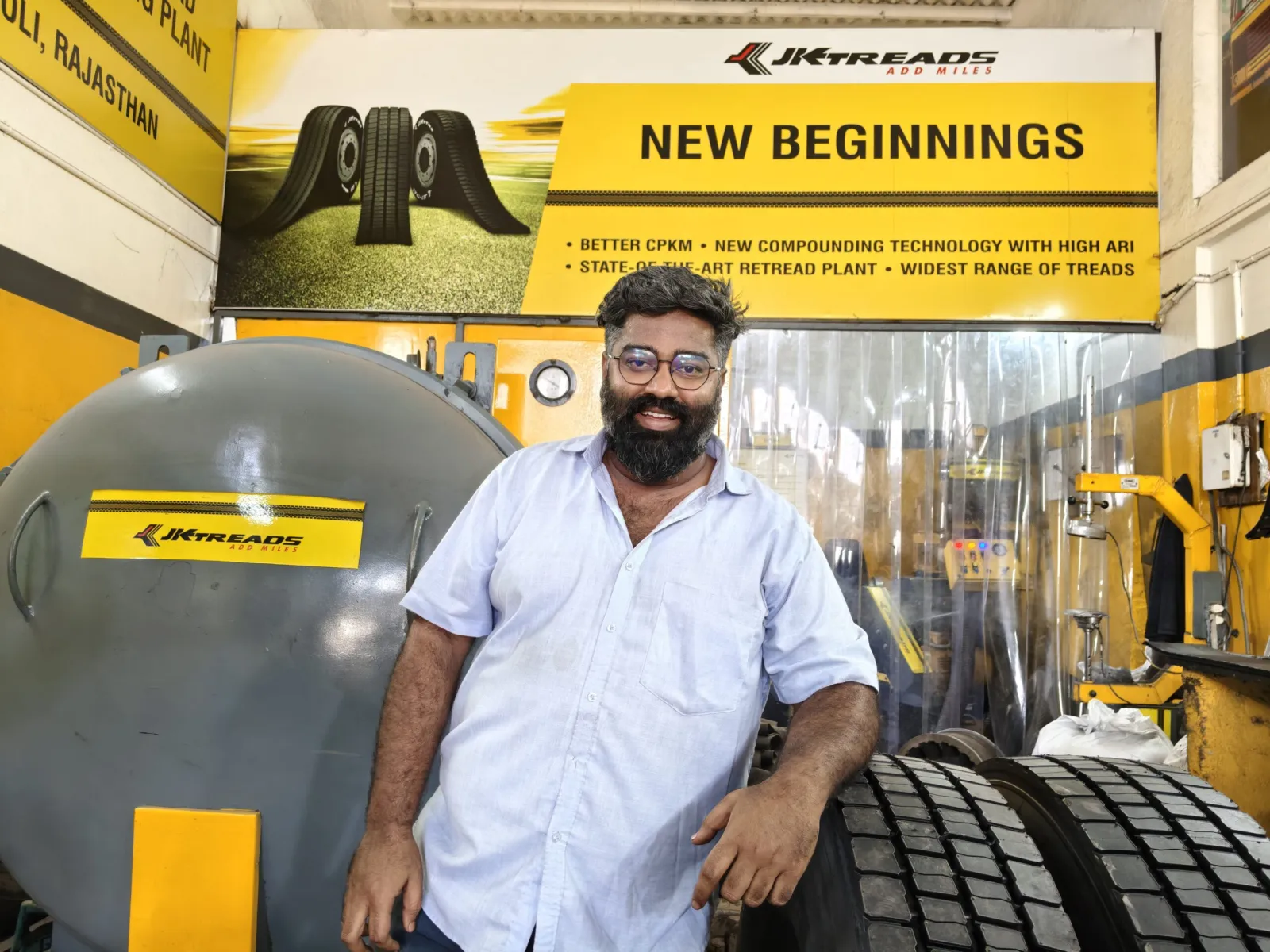
For solid tyres, the retreader is already in discussions with tread rubber manufacturers on suitable tread patterns and is confident it can start in the segment within the next three months. “Our foray into the solid tyre segment would be a significant achievement for us in the industry,” stated Karthikeya Narayanan, Managing Director, Sri Bhavani Tyres.
Narayanan, with an engineering background, is among the new breed of retreaders who think outside the box. He strongly believes in transforming retreading and that there is no room for the old-school model.
Commenting on entering the highly-specialised aircraft tyre retreading space, he said, “Aircraft tyre retreading is more of a long-term vision. In India, very few players operate in this space, but we aim to explore it and enter it. Even if it takes time or doesn’t materialise immediately, the learning and effort itself would be a great professional satisfaction for us.”
The company has been in operation since 1992. Initially based in Mumbai, it later shifted its operations to Chennai in 2014. The whole plant was revamped and replaced with new machinery. “Since then, we’ve been continuously upgrading our processes and technology to improve quality and scale,” Narayanan stated.
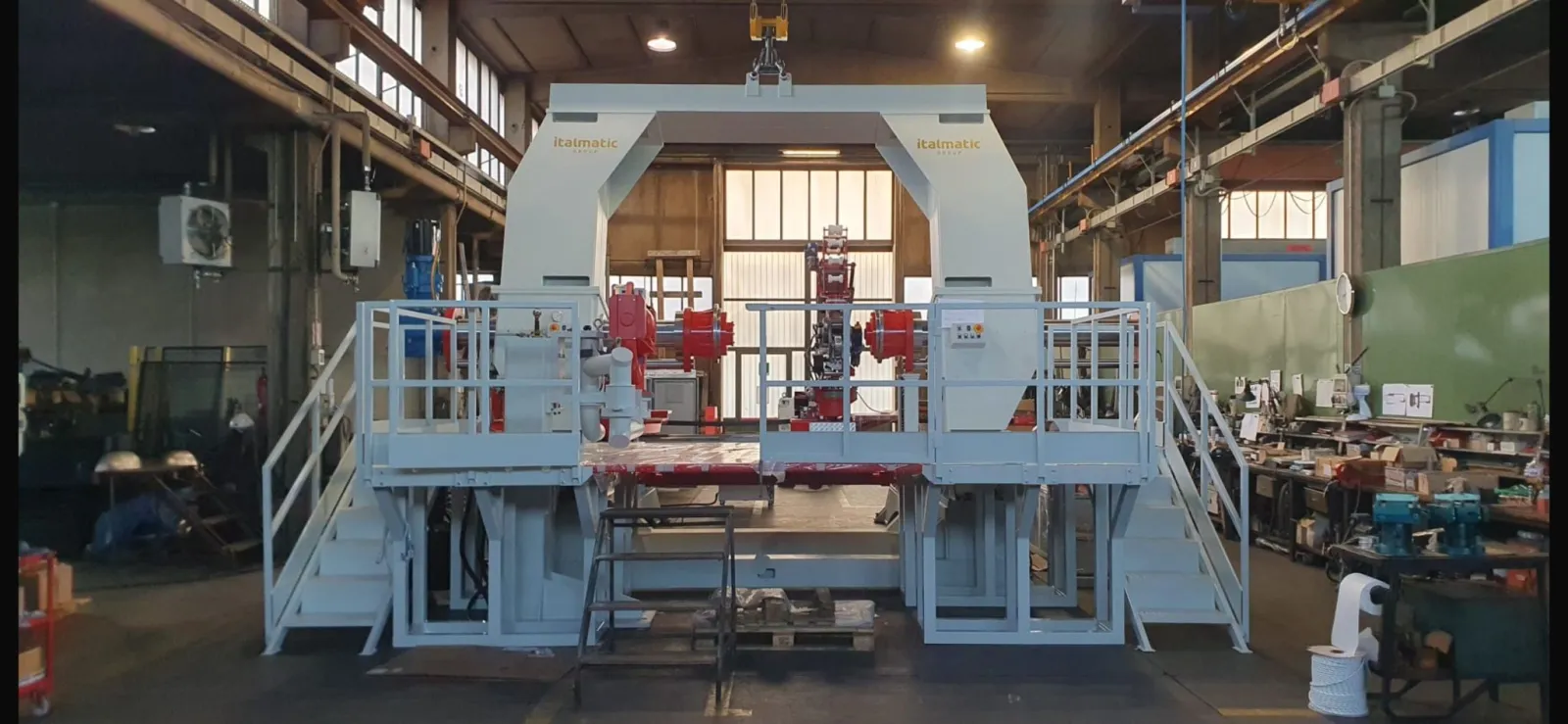
Sri Bhavani Tyres focuses on maintaining strict quality standards, which has led to an upgrade of its entire machinery, carried out gradually during 2024–2025, helping improve process consistency, quality, and overall operational efficiency. Sri Bhavani is also transitioning from rim curing to double-envelope curing in the pre-cured retreading process.
“Double envelope curing uses an inner and outer envelope with compressed air in an autoclave, giving uniform pressure across the tread and sidewalls. The main advantages are improved bonding consistency, fewer curing defects, and the ability to handle a wider range of tyre sizes and constructions. This shift helps us improve retread quality and align with industry-standard practices,” explained Narayanan.
Going forward, operating conditions in India will become more challenging, especially as the global market is moving from dual tyres to single wide tyres in trucks. “To stay relevant, we need to continuously upgrade our knowledge, processes, and equipment, and adapt these changes into our operations. Keeping pace with this evolution is critical for long-term sustainability in retreading,” he said.
At present, the Chennai plant retreads around 500 tyres per month. “When we started the Chennai plant in 2014, we were doing less than 50 tyres a month. Over the years, we’ve steadily scaled operations, and in the next two years, we are planning to expand our capacity to about 1,000 tyres per month.”
In the future, Sri Bhavani Tyres is also planning to expand its operations back into Mumbai to strengthen its presence in that key Western Indian market.