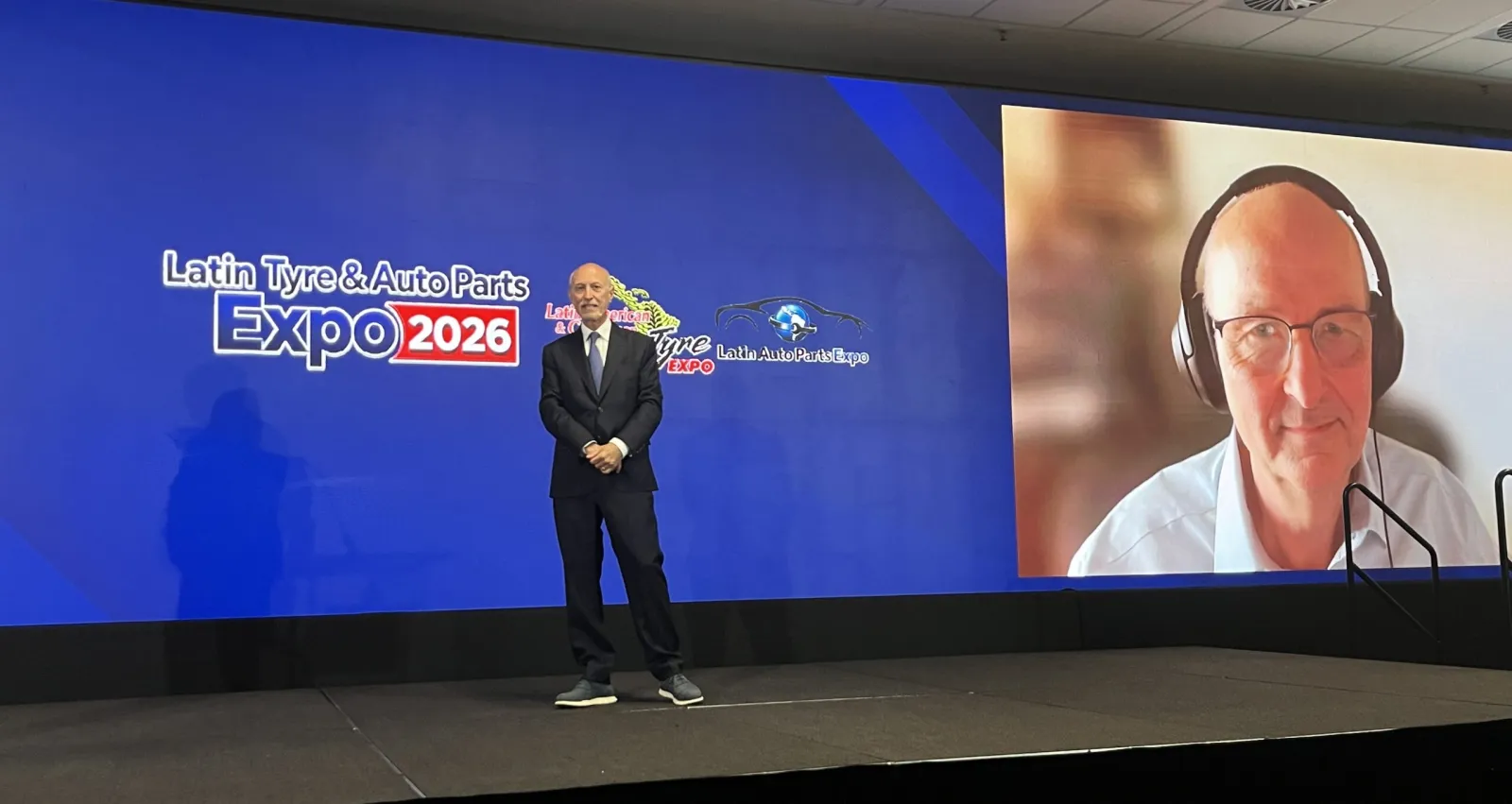
The competitive map of the global tyre industry is being redrawn as established manufacturers face increasingly sophisticated Asian competitors, according to David Shaw, CEO of Tire Industry Research. Speaking at the Latin Tyre Expo in Panama, Shaw described manufacturers combining lower prices with improving technology, stronger marketing, modern factories, and closer relationships with distributors.
The Rise of the ‘Jackals’
For retreaders, his analysis suggests that competition from low-cost new tyres is becoming more complex. The challenge increasingly concerns products whose technical performance and market acceptance are improving alongside their price competitiveness.
Shaw described several expanding manufacturers as the “Jackals”, a term illustrating their competitive approach rather than defining an industry category. They include JK Tyre and Apollo Tyres in India; Prinx Chengshan and Linglong in China; Kumho in South Korea; and Sailun.
According to Shaw, companies including Sailun, BKT, Prinx Chengshan, CEAT, Kumho, MRF, and JK Tyre have expanded considerably faster than several established manufacturers experiencing limited growth or declining volumes.
Different cost structures help explain this. Raw material costs per tyre do not differ dramatically between regions, he argued, but labour and other operating costs vary considerably. Asian manufacturers can consequently offer lower prices while maintaining attractive margins throughout the distribution chain.
Price alone, however, does not explain their progress. “In the past, technology used to be the differentiator,” Shaw said. He argued that this gap has narrowed as experienced engineers, technical specialists, and marketing executives have moved from established manufacturers to expanding Asian companies. Greater access to international technology and expertise has accelerated improvements in products and brands. “What we’ve got now is decent technology, great technology. We’ve got brilliant marketing,” he said.
Following the Market
Shaw also identified a shift in the relationship between manufacturers and distributors. He believes commercial power is moving towards wholesalers and retailers, whose data and market knowledge help them understand customer requirements, sales patterns, and acceptable prices.
Emerging Asian manufacturers have been particularly effective at responding to these signals and building long-term distributor relationships, he argued. “What the market wants is good tyres at low prices,” Shaw said. This approach contrasts with a traditional model in which manufacturers develop increasingly sophisticated products and then seek to persuade customers to buy them.
Meanwhile, Asian brands relatively unfamiliar internationally a decade ago are investing in sponsorship, advertising, customer events, and joint distributor programmes. Combined with product improvements and competitive prices, this greater visibility is reducing barriers that previously separated them from established global manufacturers.
Tariffs Change the Route
Shaw questioned how far anti-dumping and anti-subsidy measures have reduced the underlying competitive pressure from imported tyres. He argued that tariffs can shift manufacturing locations without removing the competition.
He cited the United States, where Chinese tyre imports fell dramatically after trade measures were introduced. Overall imports subsequently recovered as production shifted towards Thailand, Vietnam, and Cambodia. Chinese manufacturers have increasingly internationalised production rather than withdrawing from export markets, creating substantial concentrations of Chinese-owned capacity across Southeast Asia.
Expansion is also extending beyond that region. Shaw highlighted investments and announced projects in North Africa, with new capacity positioned to serve European and, in some cases, North American markets. Expansion in the Americas has been less aggressive, although he discussed proposed projects in Mexico and Brazil.
For Shaw, these developments demonstrate how trade barriers can redirect supply without necessarily changing the competitive forces driving it.
A New Generation of Factories
Manufacturing technology is another element of this changing competitive environment. Shaw argued that some newer Chinese tyre plants have an advantage because they were designed from the outset as highly connected, data-driven factories.
Established manufacturers often operate networks containing plants built decades ago and progressively modernised. Newer Asian competitors have had opportunities to develop production systems around digital connectivity from the beginning.
“The Chinese lead the world,” Shaw said of this generation of factories. He described networks allowing engineers to monitor machines across plants, analyse reliability, efficiency, production volumes, and costs, and adjust manufacturing decisions between factories in different countries.
In his assessment, international expansion therefore involves more than adding capacity: it also means creating interconnected global manufacturing networks.
The Latin American Question
Shaw’s analysis is particularly relevant to Latin America, which is already exposed to imported tyres across multiple price segments. Manufacturers from China and other Asian markets are becoming increasingly visible within regional distribution networks.
The competitive question, in his assessment, extends beyond whether Asian tyres are cheaper. It concerns competitors combining lower operating costs with improving technology, modern production, stronger brands, and close distributor relationships.
For retreaders, low-cost new tyres have long challenged retreading economics. If technological and perceived quality differences continue to narrow, fleets may find new tyres that are more technically competitive and priced to compete directly with retreads.
That makes casing value increasingly important. Initial purchase price represents only part of a tyre’s economics. A casing that delivers additional lives through retreading offers a different value proposition than a tyre whose economic value is concentrated in its first life.
As purchasing becomes more price-sensitive, the gap between initial cost and full lifecycle value grows. “The majors are being driven out of many markets,” Shaw said, arguing that commoditisation favours manufacturers combining competitive prices, technology, and strong distribution relationships.
His presentation raises a related question for retreading: can purchasing decisions reflect the value of the complete tyre lifecycle rather than the price of the first tyre alone?
The implications extend beyond the contest between established and emerging manufacturers. For fleets weighing increasingly affordable new tyres against retreading, the value of a casing remains part of the comparison. Shaw’s analysis suggests that improving technology, pricing, and distribution will continue to influence that choice, while the retreading industry’s response will depend on clearly explaining the value available over successive tyre lives in an increasingly competitive market.
Retreaders will need to demonstrate both product reliability and the economic value retained in a quality casing, including its ability to deliver a second life.