
David Stevens, Managing Director of the Tire Retread & Repair Information Bureau (TRIB), used his participation at the Latin Tyre Expo in Panama to deliver a clear message to the Latin American industry: the pressures facing retreading are increasingly global, and responding to them will require stronger advocacy, better communication with fleets, and greater cooperation between industry organisations.
A Global Challenge for Retreading
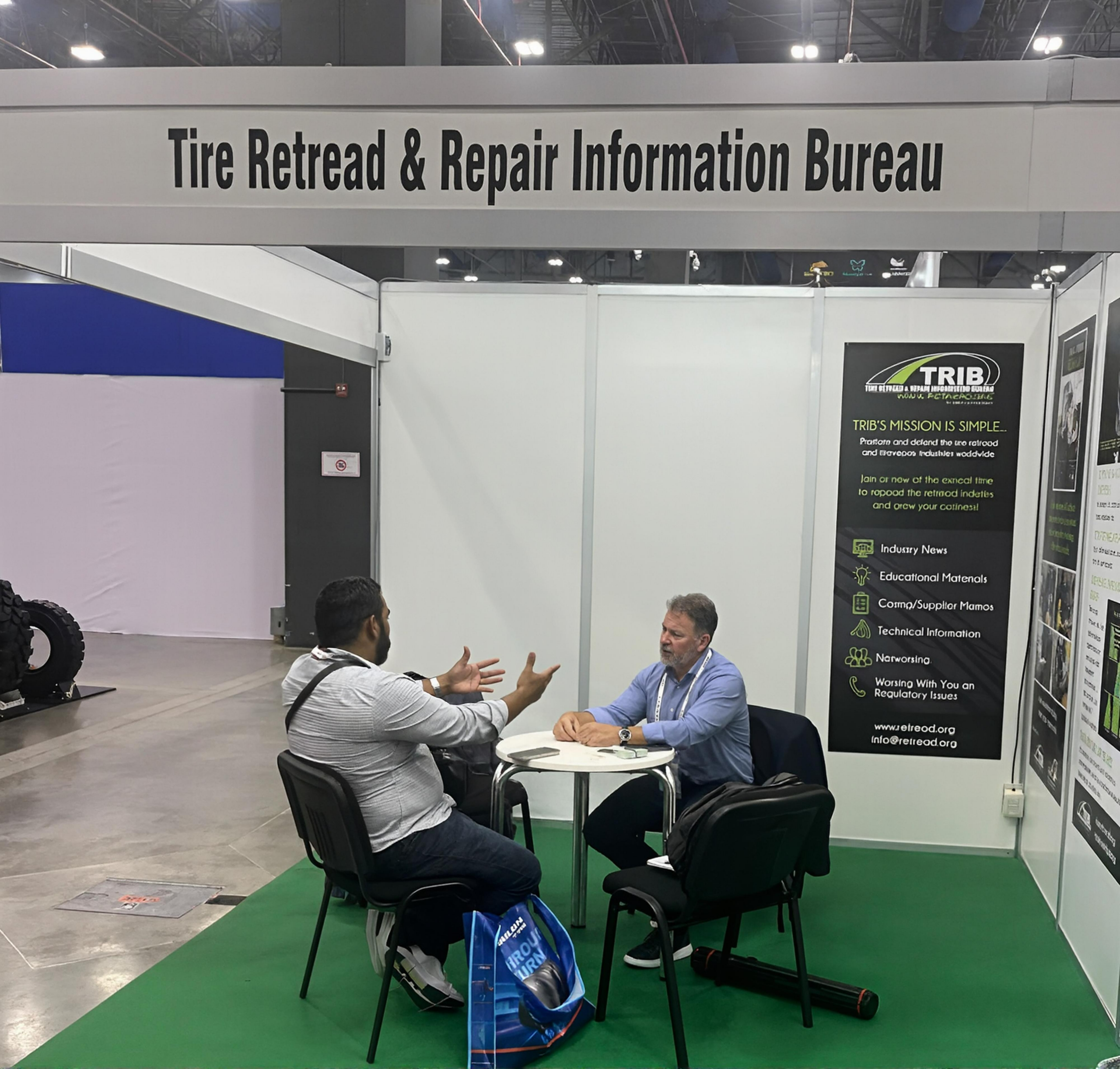
Speaking at the ALARNEU Conference in August, Stevens presented The Global Threat to Retreading, examining how low-cost new tyre imports, changing market dynamics, misconceptions about retread performance, and insufficient policy support are pressuring retreaders across regions.
His assessment of the exhibition itself was positive. Stevens described the event as well attended and apparently fully booked from an exhibitor perspective, although he said he would like to see greater participation from retreaders, tyre repair companies, and suppliers serving the retreading industry.
At the same time, one development was particularly visible. “You can clearly see the growing influence of companies and brands from Asia in the exhibitors at the show,” Stevens said.
A Global Problem
That observation provided an appropriate backdrop to Stevens’ conference presentation. While individual markets differ, many of the challenges confronting retreaders are increasingly similar. TRIB’s presentation identified the influx of low-cost imports, the narrowing price gap between new and retreaded tyres, and growing pressure on small and medium-sized retread businesses as key global market pressures.
For Stevens, this is not simply a question of competition. “The challenges are unfortunately the same everywhere,” he said, pointing to competition from what he described as unfairly subsidised Asian imports being priced below raw material costs.
Low-cost new tyres can also have consequences extending beyond the initial sale. Stevens argued they can undermine the supply of quality casings the retreading industry depends on, particularly when tyres entering fleets are treated as disposable products rather than assets capable of delivering multiple lives. This was one of the central arguments of his presentation in Panama: preserving retreading capacity is also about preserving regional manufacturing, skilled employment, technical expertise, and greater supply-chain independence.
Price Versus Value
Yet imports are only part of the challenge. Stevens also highlighted persistent misconceptions surrounding retreading, particularly among smaller fleets whose purchasing decisions can be heavily influenced by upfront tyre prices. He argued that this can lead operators to make short-term decisions that ultimately work against their own economic interests.
Stevens believes the response must be evidence. Retreaders need to demonstrate through field trials that retreaded tyres can deliver the lowest total cost of ownership without sacrificing performance or reliability. Rather than competing solely on purchase price, the industry needs to move the conversation towards lifecycle economics and measurable fleet performance.
That message is increasingly familiar across the global retreading industry. Cost-per-kilometre and total cost of ownership remain central to the economic case for retreading, particularly when fleets look beyond initial purchase price.
Retreading and the Circular Economy
Stevens also challenged policymakers to look more closely at retreading’s role within the circular economy.
His presentation argued that while circular economy policy is often treated as a relatively new concept, retreading has been applying its fundamental principle for almost a century. More importantly, retreading should not simply disappear into broad discussions about recycling.
It is, Stevens argued, a technical, standards-based reuse process. For that reason, governments and regulators play an important role. TRIB’s policy priorities include fair competition in global trade, procurement policies favouring retreaded tyres where appropriate, incentives supporting domestic manufacturing and technology investment, and policies that reward product life extension.
Public procurement was identified as one of the most achievable opportunities. Stevens described it as one of the fastest and most winnable circular economy opportunities in many jurisdictions, provided the industry can support its case with credible, standards-based practice and measurable performance data.
TRIB is already pursuing that approach in the United States, where Stevens highlighted legislative efforts combining incentives for retreaded tyres with federal procurement provisions.
Stronger Together
For Latin America, however, perhaps the most significant message from Stevens’ visit to Panama was the importance of cooperation.
Asked whether he saw opportunities for stronger collaboration between TRIB and Latin American industry associations, Stevens was unequivocal. “I’ve always been a big believer in sharing information across geographies,” he said. “As a global industry, we are stronger by sharing the challenges we face, the ways we’re tackling those challenges, and how we plan to successfully move forward.”
That philosophy is particularly relevant at a moment when retreaders in North America, Latin America, Europe, and other regions are confronting remarkably similar questions around imports, regulation, fleet education, casing availability, and recognition within circular economy policies.
Stevens specifically welcomed ALARNEU’s efforts to bring together organisations from across Latin America and confirmed that TRIB intends to continue supporting those initiatives.
“Your efforts to bring parties together in Latin America are very valuable, and TRIB will continue to support those efforts in any way we can.”
Ultimately, Stevens’ message in Panama was not simply that retreading faces a threat. It was that the industry still has tools with which to respond. Education, advocacy, evidence-based fleet communication, supportive public policy, and international cooperation all formed part of his proposed path forward. For an industry whose challenges increasingly cross borders, its response may need to do the same.