FeaturedNews

China Enters a New Stage of Tyre Retreading 

As the world’s largest tyre producer and seller, China produces more than 300 million scrap tyres each year, but the retreading rate has long hovered around 5%, far below the 40%-60% levels in Europe and the United States. To increase the rate, China issued five national standards for tyre retreading, which officially took effect on 1 August 2025.

China Moves to Address Retreading

As core supporting measures for the “Action Plan for Improving Traction Equipment Upgrades and Consumer Goods Trade-in with Standards“, the release of these standards marks the official entry of China’s tyre retreading industry into a new stage of standardised and regular development, injecting strong momentum into resource recycling and the transition to a green economy.

The newly released national standard system covers the entire tyre retreading industry chain, including two foundational standards: “Technical Specification for Retreaded Tyre Production” (GB/T 45292-2025) and “Tyre Retreading Process” (GB/T 26732-2025) as well as specialized standards for passenger cars, trucks, and construction machinery: “Passenger Car Retreading Tyres” (GB/T 14646-2025), “Truck Retreading Tyres” (GB/T 7037-2025), and “Construction Machinery Retreading Tyres” (GB/T 45291-2025).

China’s National Technical Committee for Tyre and Rim Standardisation, Automobile, Industrial and Agricultural Machinery Tyre and Rim, was responsible for developing these standards. Many industry companies are involved in drafting these standards, such as Zhongce Rubber Group, Sailun Group, Shandong Linglong Tyre, Guizhou Tyre, Prinx Chengshan (Shandong) Tyre, Qingdao Taikaiying Special Tyre, Beijing Rubber Industry Research and Design Institute, China Chemical Equipment Technology Group, Gaotang Xinglu-Bendake Tyre Strengthening, and Jiangsu Yisheng Investment Group.

This standard system breaks away from the traditional single-link management model and establishes a closed-loop management system that encompasses the complete tyre selection, production, and use process. From strict control of tyre carcass quality standards at the source of production, to clear environmental protection equipment requirements in the process. Finally, to standardise product performance indicators in end-use applications, this system forms a regulatory framework driven by both technology and management.

It is like a sharp scalpel, directly targeting the industry’s chronic problems: unclear carcass grading, lack of environmental protection facilities, and vague safety standards. As a result, domestic companies are at a turning point in their systematic upgrading.

The new national standard also places special emphasis on the use of non-destructive testing equipment. During tyre selection, it recommends using laser speckle pattern inspection machines, X-ray inspection machines, and other equipment to conduct in-depth inspections of the tyre carcass, a step not previously mandated by the standard.

In terms of energy conservation, the Standard sets specific indicators for energy consumption: the comprehensive energy consumption of pre-vulcanisation retreading must be lower than 15 (kWh)/standard conversion bar, and the comprehensive energy consumption of model retreading and moldless vulcanisation tread engraving retreading is required to be lower than 18 (kWh)/standard conversion bar.

Moreover, the new national standard proposes, for the first time, the principle of ‘priority cascade utilisation of waste tyres’, encouraging enterprises to adopt resource-based technologies such as low-temperature cracking and rubber powder modification to accelerate the elimination of backward production capacity.

Industry Reorganization

Previously, retreaded tyres were unpopular in China, and investors were not optimistic about the prospects of the tyre retreading industry. Currently, tyre retreading is considered a semi-public welfare undertaking, with added value for processed products and high recycling, processing, and transportation costs.

The implementation of the new national standard would reshape the competitive landscape of the tyre retreading industry. On the one hand, the increased technical barriers will eliminate many small workshops that do not meet the standards. On the other hand, policy support will create greater room for development for those who meet the standards.

The Ministry of Finance and the State Administration of Taxation recently issued a preferential VAT policy for comprehensive resource utilisation, stipulating that retreaded tyre products that meet national standards such as GB/T 7037 and GB/T 14646 can enjoy a 50% VAT refund. To enjoy the benefits of this policy, enterprises must pass ISO9000 and ISO14000 certification, which puts higher requirements on the standardised development of the industry.

Companies represented by Wuhan Tianli Group are becoming industry benchmarks, and their standardised practices for factory renovation have provided a model for implementing the new national standard. This group’s factory has taken the lead in applying non-destructive testing equipment such as laser speckle and X-ray.

Tianli Park is equipped with 100,000 square meters of modern production and warehousing workshops, and its environmental protection facilities and energy consumption management have long complied with the requirements of the new national standard.

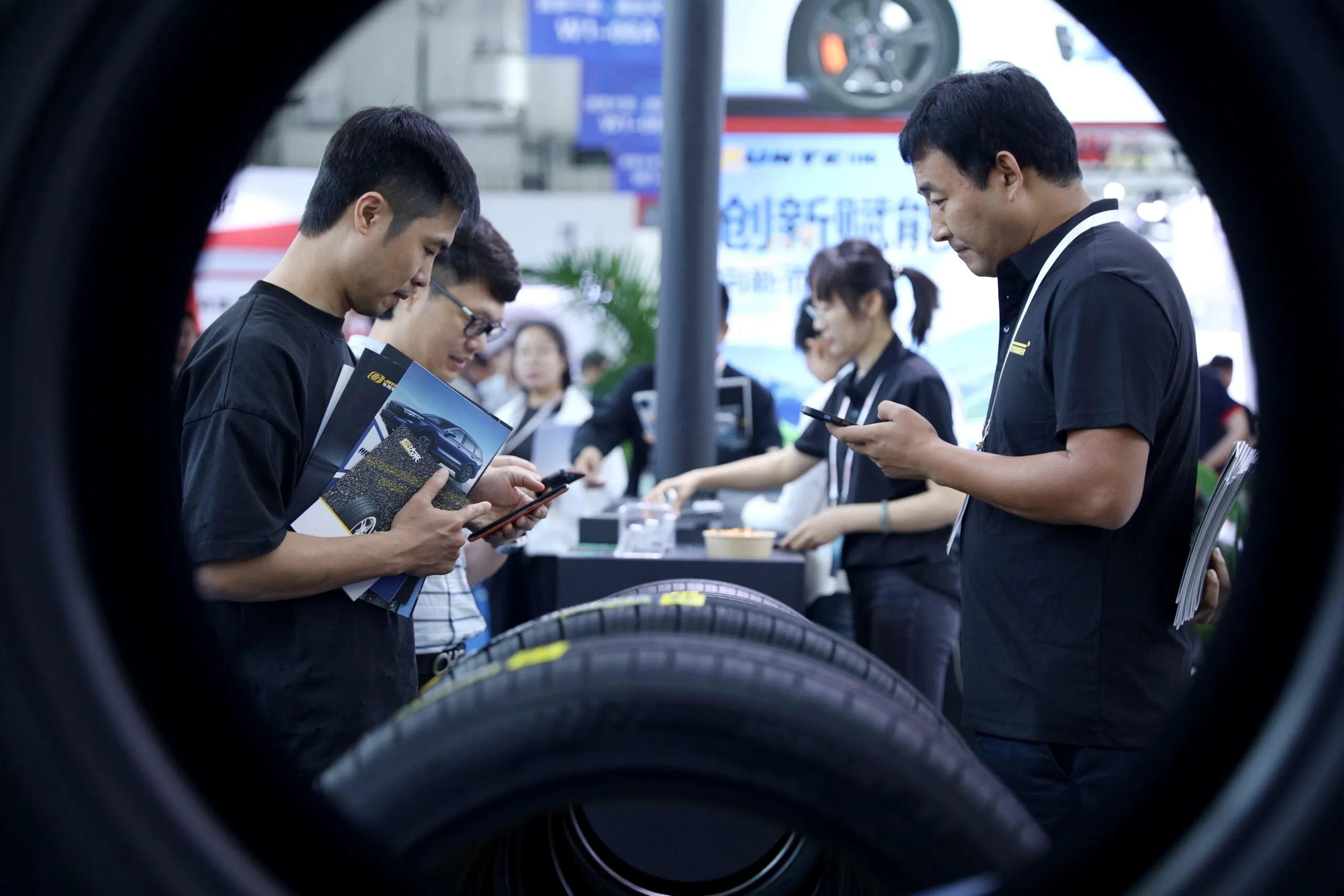
Image courtesy of Shandong Huasheng Rubber Co., Ltd.

News by date

The Latest

Subscribe to our newsletter and receive a section of articles every weeks

loading...
You May Also Like