With more than 23 years of software development experience, Brazilian technology company Junsoft is strengthening its position in the tyre retreading industry through specialised management software, artificial intelligence, and data analytics. Its objective is to help retreaders improve efficiency, understand their costs and compete in a market facing increasing pressure from low-cost imported tyres.
Managing the complete operation
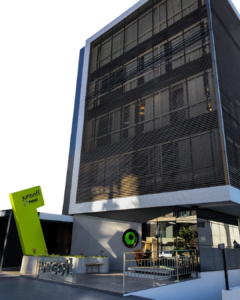
Headquartered in Toledo, in western Paraná, Brazil, Junsoft employs more than 70 people and supports over 1,700 customers and 9,000 users across Brazil and Latin America. Following an acquisition a little over a year ago, the company has retained its established culture while entering a new phase focused on innovation, technological renewal and long-term growth.
At the centre of its tyre industry offering is Vulcano, an enterprise resource planning (ERP) system developed specifically for retreaders. Created within a retreading plant, it covers the complete operation, from casing collection through production and delivery to invoicing.
“Vulcano gives the retreader control, precision and management insight,” explains Nayara Almeida, Product Manager. “The system was born inside a retreading plant and follows the operation from end to end, providing the foundation for every business decision.”
Vulcano records casing collections through a mobile application, capturing information at customers’ premises and transferring it directly into the system. Once a casing reaches the factory, its progress is tracked through each production stage, with materials and associated costs recorded against the individual tyre.
The system also supports technical inspections, quality reporting and analysis of casings rejected or deemed unsuitable for retreading. These functions are integrated with invoicing, dispatch, finance, accounting, taxation, inventory and purchasing.
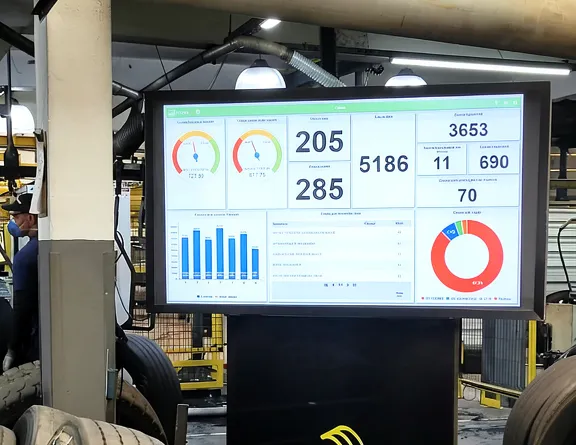
By recording the materials and work associated with each tyre, Vulcano helps retreaders understand their actual costs, identify waste and rework, and make decisions based on operational data. The software also incorporates business intelligence and AI tools to support management decisions.
Junsoft’s wider portfolio includes SuperTire for auto centres, Gourmet ERP for food-service businesses, and Junsoft ERP for the broader market. All solutions operate on a monthly subscription basis, with implementation provided at no additional charge.
Traceability and quality control
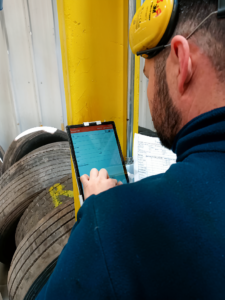
Casing traceability is central to Vulcano. Each collection order is registered against the tyre’s owner, including customers maintaining their own casing inventories. Individual tyres can be identified by serial number, DOT code, hot-branding, brand, size and model, with vehicle registration and fleet identification also recorded where required.
This information follows the tyre throughout production and provides a detailed history if it returns for warranty assessment. The retreader can establish when it was processed, which materials and operators were involved, and whether rework was necessary.
Such records provide a stronger basis for warranty decisions and customer discussions while helping identify recurring quality problems.
Vulcano serves retreaders working with truck and heavy-duty, agricultural, off-the-road (OTR) and remoulded tyres. Sales Manager Rodrigo Gibbert sees this specialisation as a key differentiator. “Vulcano is not a generic ERP adapted for a retreader,” he says.
The platform can accommodate the requirements of major tread-rubber suppliers and licensed retreading networks. According to Almeida, adjustments generally involve features such as material-batch control, mandatory data fields and verification reports, enabling retreaders to meet network standards while managing their business through one system.
Although Vulcano has no native integration with specific fleet-management systems, its open APIs let customers connect it to platforms they already use.
Artificial intelligence and product development
Artificial intelligence is becoming increasingly important to Junsoft’s development strategy. Chief Technology Officer Marcos Agnes points to the company’s accumulated operational data as the foundation for this work.
“For 23 years, Junsoft’s systems have recorded what happens inside Brazil’s retreading plants: every casing received, every inspection and every retread,” he says.
One development is natural-language reporting, allowing managers to ask questions such as which fleets recorded the highest casing rejection rates during a particular quarter without manually generating reports or running queries.
Another initiative is an AI-powered application connected to the retreader’s system, enabling sales teams to follow customers’ casings from collection through to delivery.
AI already answers product questions through Junsoft’s documentation portal and within the ERP. The company plans to extend this assistance to platforms such as ChatGPT, Gemini and Claude. It is also developing AI-assisted technical monitoring to help identify and resolve problems across approximately 1,500 installations in retreading plants and auto centres, potentially before customers notice them.
“For Junsoft, AI is not an end in itself,” Agnes says. “It is a way to strengthen what retreaders already do well, giving production more life and control, reducing effort and rework, and delivering information faster and faster.”
The company is also investing in RFID tyre tracking and analytics to extend the value of its software beyond routine administration.
Implementation and customer support
A typical Vulcano implementation takes around three weeks, followed by approximately one further week of monitoring and active support. Operations Manager Flávio Pedroso says the process covers preparation, installation, data registration, tax configuration, training and activation.
Junsoft is working to reduce the initial preparation phase from two weeks to one, using recorded training sessions and AI-assisted data imports and configurations.
Dedicated teams cover implementation, sales, customer success and technical support. Marketing Coordinator Guilherme Fonseca says this structure reflects the company’s commitment to continuous improvement and customer success. Around 30% of Brazilian retreaders already use Junsoft solutions, keeping the company closely connected to the industry’s needs.
International ambitions and market pressures
Brazil remains Junsoft’s principal market, with Vulcano operating in more than 300 retreading plants. More than 370,000 tyres pass through the system every month. The company also has customers in Chile, Ecuador, Argentina and Peru.
Gibbert says Junsoft intends to build on its Brazilian experience as it expands internationally. Vulcano is prepared to support other languages, and its multilingual support team provides a foundation for entering additional markets. Europe and the United States are among the regions under consideration, ideally through partnerships with organisations familiar with their retreading industries.

In the nearer term, CEO Guilherme Gazzoni says the priority is to provide existing customers with more comprehensive tools, including AI, RFID tracking and analytics.
These developments come as Brazilian retreaders face growing competition from low-cost imported tyres. Almeida acknowledges the pressure but believes it also demonstrates the value of effective management.
“It is a real challenge for the sector, and for Junsoft too, because our customers’ success is our success,” she says.
With margins under pressure, understanding the actual cost of each tyre, reducing waste and rework, improving productivity and demonstrating consistent quality become increasingly important. Vulcano is intended to provide the information retreaders need to make those improvements.
Sustainability and the future of retreading
Junsoft also believes the industry deserves greater recognition for its environmental contribution. Retreading extends tyre life while reducing raw-material consumption and waste, aligning the process with wider sustainability objectives.
Almeida points to developments in Chile and Peru, where sustainability legislation includes tyres. In Brazil, she believes more targeted policies are needed to recognise retreading as both an economic and environmental solution.
The Brazilian Association of Tyre Retreading (ABR) has worked to address historical perceptions of the industry as environmentally damaging. Junsoft would like to see tax incentives and public policies that encourage retreading and recognise its contribution to resource efficiency.
For Junsoft, the commercial and environmental arguments are closely connected. Retreaders must demonstrate that their products offer an economical alternative to new tyres while maintaining quality and operating efficiently.
By combining specialised ERP software with AI, traceability and analytics, Junsoft aims to help retreaders gain greater control over their operations and make better-informed decisions. As competition intensifies, the company sees its role as more than a software supplier: it wants to be a technology partner that helps the retreading industry improve productivity, demonstrate value, and build more competitive businesses.