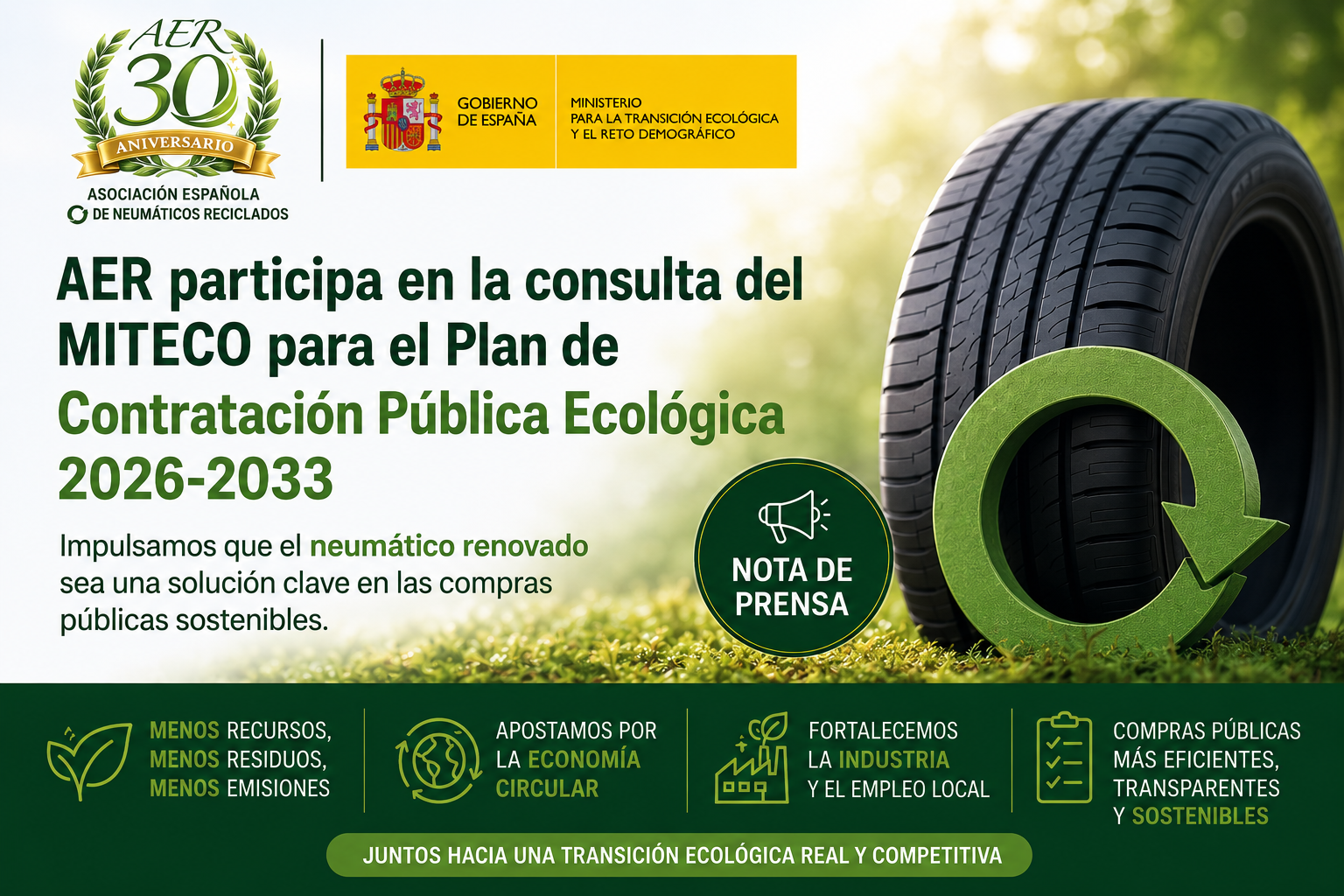
The Spanish Association of Retreaded Tyres (AER) has submitted proposals to Spain’s Ministry for Ecological Transition and the Demographic Challenge (MITECO) as part of the public consultation for the country’s 2026–2033 Green Public Procurement Plan, urging the government to give retreaded tyres a more prominent role in public purchasing.
Established Technology Supporting the Circular Economy
The association believes public procurement has the potential to become one of the strongest drivers of the circular economy by encouraging the adoption of products with lower environmental impacts. However, AER argues that the new plan must go beyond broad policy commitments and provide contracting authorities with clear procurement criteria, practical guidance, and legal certainty to facilitate the inclusion of sustainable products already established on the market.
Among the technologies AER believes should receive greater recognition is the retreaded tyre, which extends the life of the casing, reduces the need to manufacture new tyres, and preserves the materials and energy embedded in the original product.
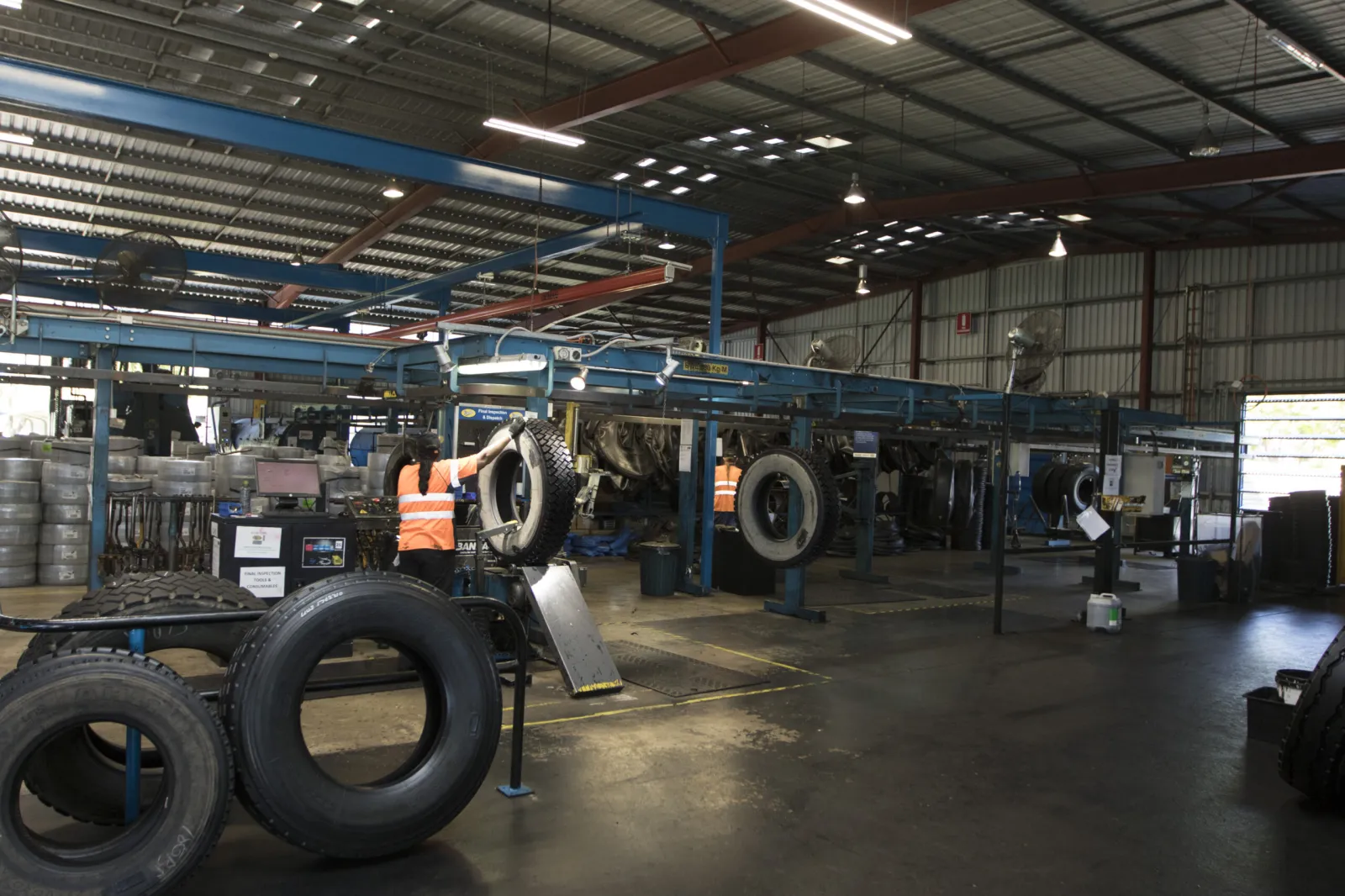
In its submission, AER emphasises that tyre retreading is not an emerging technology but a well-established industrial process supported by decades of technical expertise and a comprehensive regulatory framework.
Before returning to the market, retreaded tyres must comply with all applicable approval, testing, and quality control requirements, making them regulated and traceable products that meet recognised safety standards.
According to the association, one of the remaining barriers to wider adoption in public tenders is a lack of technical understanding among procurement authorities. AER argues that outdated perceptions and limited practical guidance continue to result in retreaded tyres being excluded from some tenders without sufficient technical justification.
The association maintains that where retreaded tyres meet the required specifications and are suitable for the intended application, there is no objective reason to exclude them automatically from procurement processes.
Environmental, Economic and Industrial Benefits
AER highlights several advantages of incorporating retreaded tyres into green public procurement.
From an environmental perspective, retreading extends tyre life, preserves casings, reduces raw material consumption, and delays the generation of end-of-life waste. It also reduces the demand for manufacturing completely new tyres and lowers the environmental impacts associated with extracting, processing, and transporting raw materials.
The association says this approach aligns directly with circular economy principles by keeping products and materials in use for as long as possible before recycling or disposal becomes necessary.
Economically, AER argues that retreading can reduce the total lifecycle cost of tyres used by public fleets. It therefore recommends that procurement decisions should consider whole-life costs rather than focusing solely on initial purchase prices. Factors such as service life, maintenance requirements, casing recovery, and environmental costs should all form part of purchasing decisions.
AER also stresses the industrial benefits of the sector. Retreading plants support highly skilled employment, preserve technical expertise, maintain manufacturing capacity within Spain, and strengthen local supply chains. Increased public sector demand could provide greater stability for domestic retreading businesses, many of which have faced sustained competitive pressure and declining production capacity in recent years.
The association also argues that supporting domestic retreading contributes to Europe’s strategic autonomy by reducing dependence on imported products and avoiding sustainability policies that inadvertently favour products manufactured outside Europe under production models with higher transport-related environmental impacts.
Existing Legal Support
AER notes that Spanish legislation already provides a legal basis for promoting retreaded tyres in public procurement.
Under Royal Decree 712/2025 on End-of-Life Tyres, public administrations are required, where technically feasible, to promote the use of retreaded tyres in publicly owned fleets and in fleets providing public services, whether directly or under contract.
According to AER, this provision extends the potential use of retreaded tyres across a wide range of applications, including urban and regional transport, municipal services, waste collection, public concessions, publicly owned companies, and other services delivered on behalf of public authorities.
However, the association believes that this legal recognition has not yet been consistently reflected in procurement practice. Retreaded tyres remain absent from many tender specifications and, in some cases, continue to be excluded either directly or indirectly without sufficient technical justification.
For AER, the new 2026–2033 Green Public Procurement Plan represents an opportunity to translate existing legal commitments into practical procurement measures that encourage wider adoption.
Technical Support Offered
The association has also offered to work with MITECO during the development of the plan by providing technical expertise, practical examples, and assistance in identifying barriers to implementation and developing realistic procurement criteria.
AER believes the new procurement framework could represent a significant step forward for Spain’s retreading sector by expanding purchasing options for public authorities, reducing resource consumption and waste generation, and strengthening domestic manufacturing, employment, technical expertise, and production capacity.
Commenting on the consultation, Adrián Fernández Monge, Secretary General of AER, said:
“Green public procurement should turn the principles of the circular economy into real purchasing decisions. Retreaded tyres already exist; they are regulated, safe, and deliver significant environmental and industrial value. The next step is to make it easier for public authorities to include them in procurement with clear criteria and full legal certainty.”