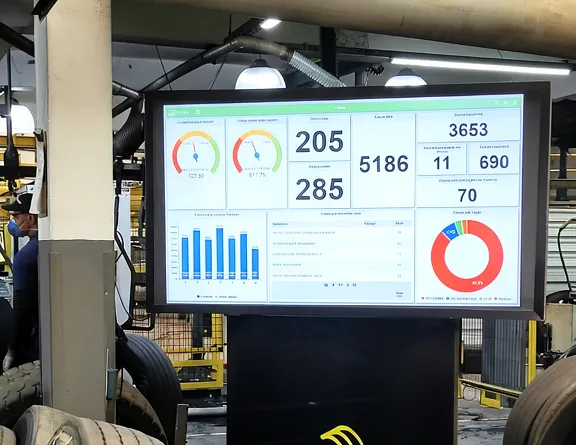
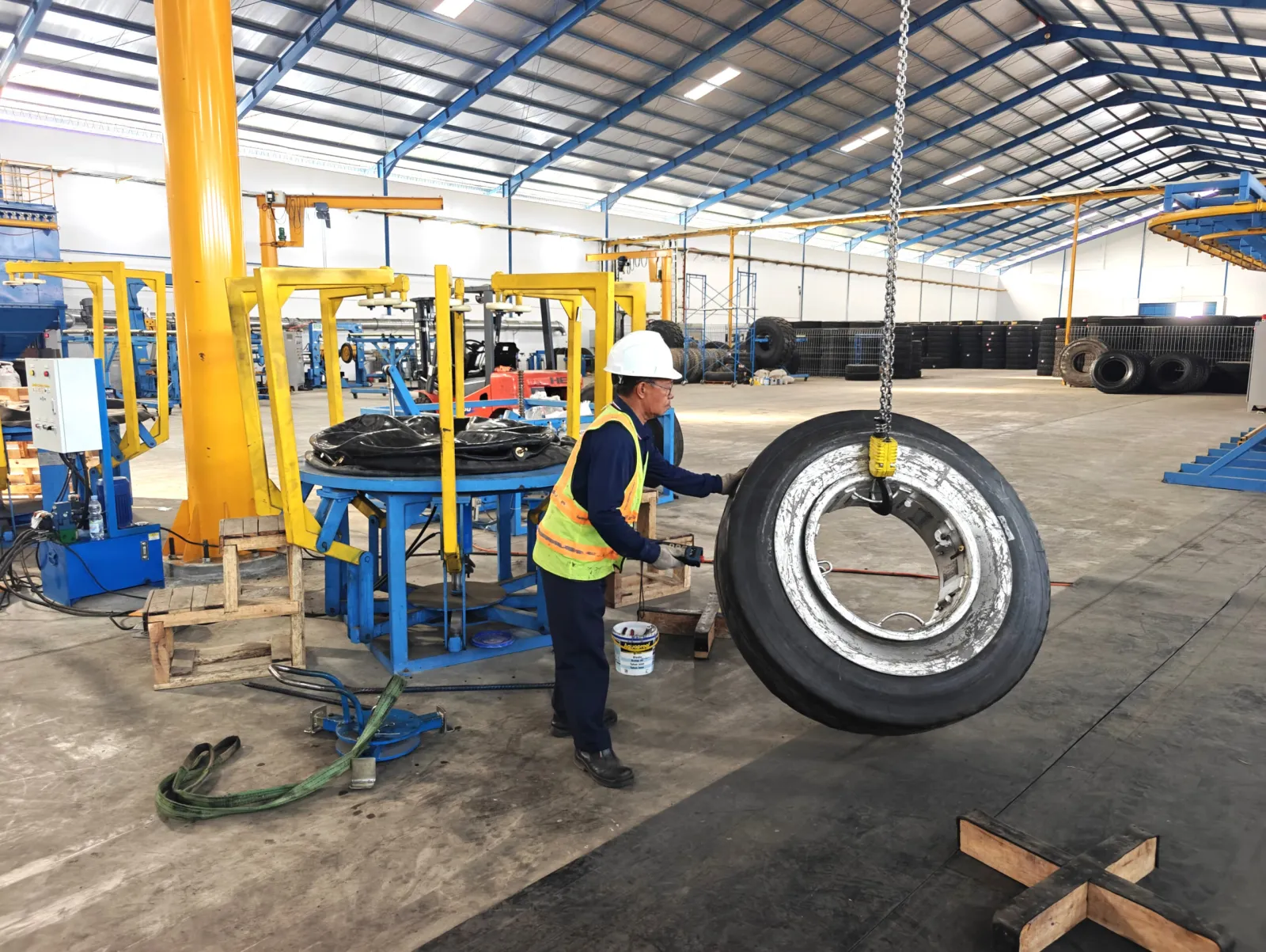
Stamford Tyres began production at its second Indonesian retreading plant in Makassar, South Sulawesi, in January 2026, following its first successful plant in Timika, Irian Jaya. While it’s great to see a company grow and expand, the timing coincided with weaker mining activity, which began to affect demand for tyres and the supply of casings. Senior Vice-President and Head of Indonesia Operations Erwin Chua spoke to Retreading Business about the plant’s first months, the changing mix of vehicles in Sulawesi, and why he believes a service covering the full life of a tyre offers a stronger basis for growth than competing on the price of new tyres alone.
New Stamford Tyres Plant in Indonesia
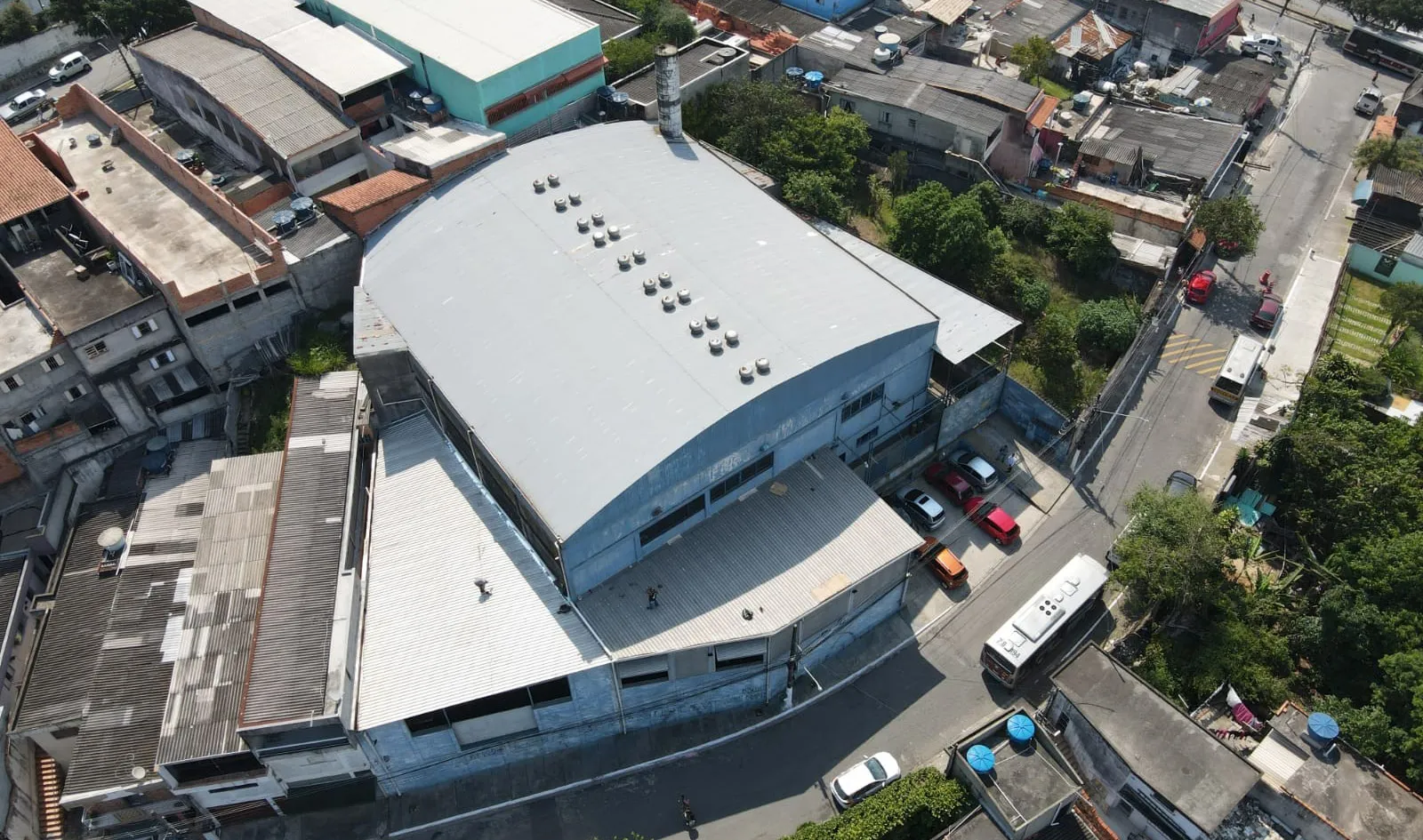
The machinery for Stamford Tyres’ Makassar plant arrived in the final quarter of 2025. Commissioning followed, and production began in January 2026. Chua expected the facility to benefit from demand from local mining operators, for whom restrictions on new tyre imports could make retreading an attractive option. The timing, however, proved difficult. Chua says reduced mining activity lowered tyre consumption, while the effect varied considerably between operators. Some continue to work at their previous level; others have cut production sharply. Stamford Tyres has kept the retreading line running, but output is below its original plan.
“The production is not according to what we are planning,” Chua says. The effect goes beyond immediate retread orders. Fewer tyres in service also mean fewer worn tyres becoming available for collection. For a new plant trying to establish a reliable casing supply, the two pressures arrive at the same time. Chua describes it as a chain reaction. If fleets are using fewer tyres, Stamford Tyres has fewer opportunities to recover casings, even from customers who remain interested in retreading. The company must therefore build its customer base while its supply is constrained.
However, this has not changed his assessment of the investment. He says the business was never expected to reach its intended output overnight. The immediate task is to develop a dependable flow of suitable casings and show customers how the new tyre and retread operations can work together.
Matching the Plant to the Market
The Makassar plant was equipped for truck and selected off-the-road tyres, with curing chambers capable of handling rim sizes up to 35 inches. Stamford Tyres considered going further at the outset. Chua says larger 49-inch tyres would have required different building and buffing equipment, so that capability was left for a potential second phase.
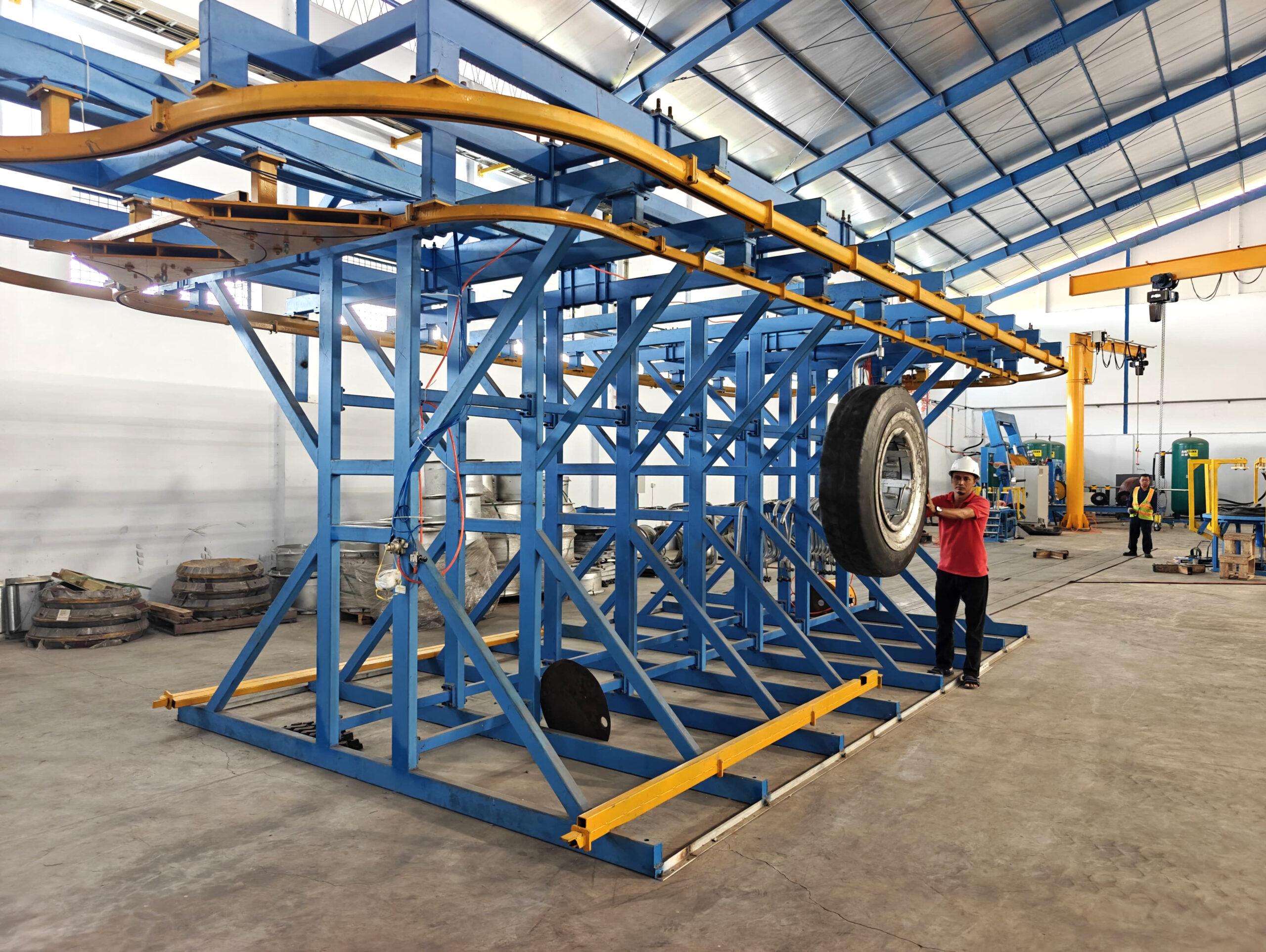
Geography also informed the decision. Chua sees the immediate Sulawesi market as a mixture of truck tyres and certain smaller off-the-road sizes. Much of the demand he associates with 49-inch tyres lies in Kalimantan. Moving casings between islands would add time and cost to an operation already dependent on collecting tyres from dispersed customer sites.
The vehicle mix in mining is changing as well. Chua says Chinese wide-body dump trucks have gained ground, with operators attracted by their purchase price. Their tyre sizes fall within the Makassar plant’s existing capability, creating a potential source of work without another machinery investment.
He sees both sides of that development. “Good and bad for us,” he says. Stamford Tyres can handle the sizes being introduced, but the relatively low price of some new tyres narrows the amount a customer may be willing to pay for a retread. A technically suitable casing does not, by itself, guarantee a commercially attractive job.
It brings the conversation back to a problem Chua encounters throughout tyre sales. A buyer can compare two purchase prices immediately. Comparing service life, downtime, and cost per kilometre takes records and time. Chua says customers may accept the longer-term case for a better-performing tyre and still choose the cheaper one purely because the upfront cost is easier to identify.
The Casing Question
“As long as we can collect the casings, we can do the retread,” Chua says. Collection, however, is only the first step. The plant needs casings that can pass inspection and remain sound through preparation.
Makassar is some distance from many of the mining sites the plant serves. Stamford Tyres collects casings from customers it already sells new tyres to and also approaches other operators for additional supply. The company inspects tyres before bringing them to the plant, but Chua points out that a surface inspection cannot expose every problem.
Stamford Tyres began collecting casings before the line started operating. Once buffing began, defects became apparent in some of that early stock, resulting in a higher rejection rate than expected. The experience has made the team more careful about what it collects and how it assesses a casing before committing transport and production time.
Chua says the casings processed so far have also challenged some assumptions about brand. A number of Chinese-brand casings, he says, have proved suitable for retreading after buffing. Other casings have not. His practical test is the condition of the individual casing and the performance of the finished retread, rather than the name on its sidewall. This theme is becoming increasingly common in Southeast Asia, where new Chinese tyres reach the market faster and in much higher numbers than further afield.
The distinction matters to Stamford Tyres’ plans, too. An operator’s tyre purchasing decision affects the quality of casings that may later return to Makassar. If the company can stay involved from the new tyre sale through collection and retreading, it has a better opportunity to track that history and assess what works in a particular application.
From New Tyre to Retread
Chua wants Stamford Tyres to offer customers a connected service: supply the new tyre, collect its casing, retread it where suitable, return it to use, and track performance. He believes that approach gives the customer a clearer view of tyre costs than treating each purchase as a separate transaction. This may seem de rigueur to some audiences; however, this practice is still fledgling in some areas of the world.
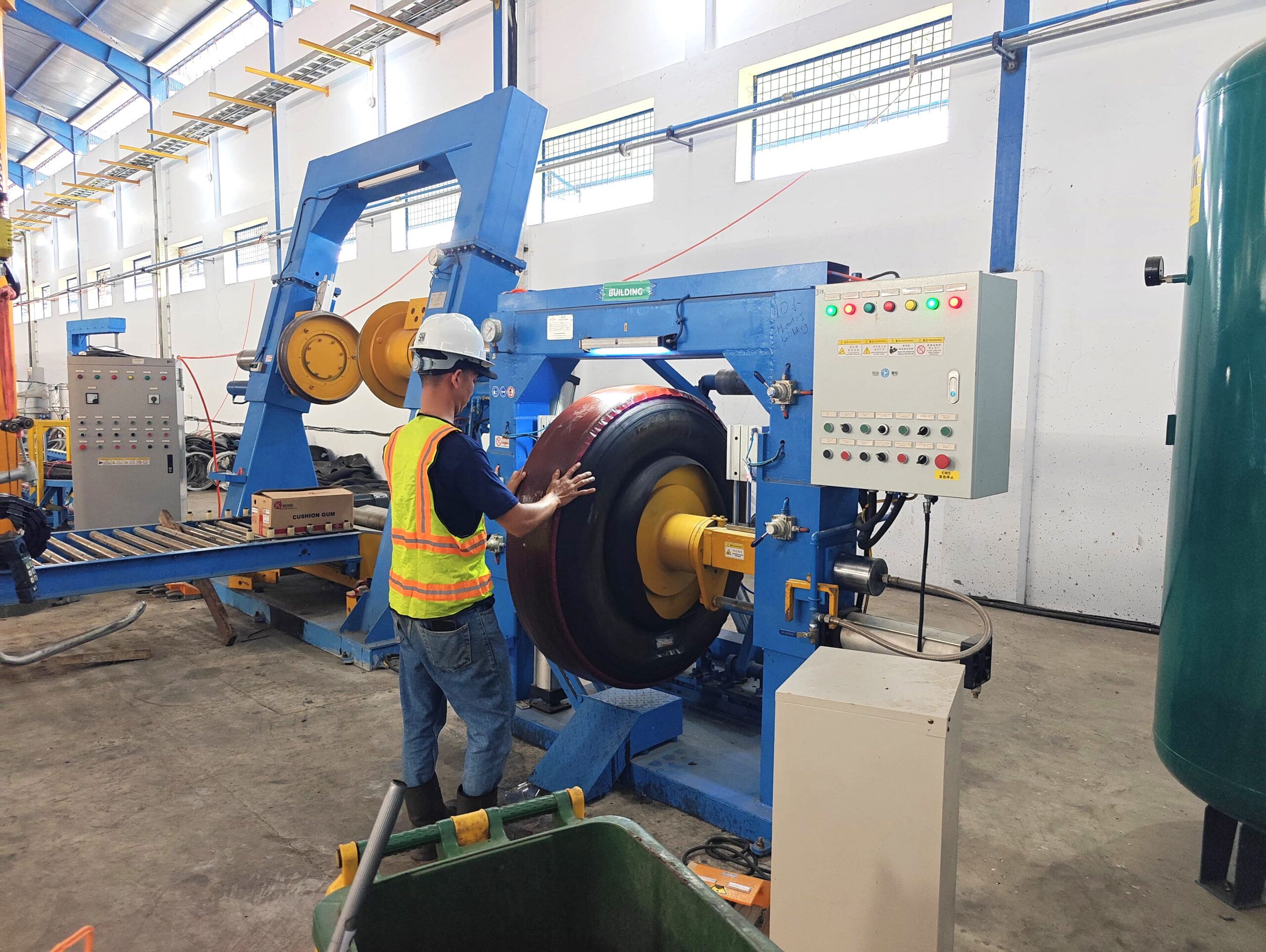
“Selling tyres everyone can do,” he says. The difference, in his view, is the service that follows the sale. Competing only by reducing the price of a new tyre leaves a distributor vulnerable to the next lower offer. Collection, retreading, and performance information give Stamford Tyres a broader role in a fleet’s operation.
The company sells new tyres and retreads in Indonesia. Chua mentions Giti truck tyres and the Blackhawk range associated with Sailun among its products. He says discussions with suppliers have included referring fleet customers to the Makassar retreading service. Those discussions are in the early stages; he also sees scope to link the price of a new tyre to a subsequent retread offer.
The service model is particularly relevant while casing supply is tight. A new tyre customer may become a future source of casings, while a customer who sees the results of a retread may be more willing to plan the next tyre purchase around its full working life. Chua wants Stamford Tyres to make that connection visible through tyre performance records, rather than relying on a general claim that ‘retreading saves money’.
He also sees demand beyond mining. Coaches, local transport trucks, and vehicles working around ports form part of the market he hopes the plant can serve. Developing those segments would reduce the operation’s dependence on any one group of mining customers, although each application brings its own requirements for tyre selection and casing collection.
A Local Supply Chain
Stamford Tyres chose a cold-cure process for Makassar. Chua says the group already has long experience with that approach in Malaysia and Singapore. Using a familiar process allowed it to draw on existing knowledge when establishing the new Indonesian operation. A hot-cure line, he felt, would have required a different skill set and added complexity to the initial investment.
Supply of tread material was another consideration. Chua says suitable material can be sourced in Indonesia and elsewhere in the region, but Stamford Tyres has prioritised domestic suppliers. Most of its current supply comes from an established Indonesian source, and material from another local manufacturer is under trial.
Cost is part of the reason. Chua says imported material has become less attractive when you factor in exchange rates and transport. Importing economically can also mean ordering by the container. A local supplier can deliver smaller quantities closer to the plant’s needs, leaving less money tied up in stock.
Chua says Indonesia’s emphasis on local sourcing was another factor in the decision. For Chua, domestic purchasing supports how Stamford Tyres intends to operate in the country, as well as its immediate inventory and cost decisions. The company is retaining alternative sources, but he expects local supply to remain the priority as long as its price and availability meet the plant’s needs.
Chua contrasts Indonesia with Malaysia when discussing the wider retreading market. In his view, Indonesia’s controls on new tyre imports help preserve a place for local production and retreading. In Malaysia, he says, low-priced new tyres can compete directly with retreads in applications such as trailer positions. That makes the case for retreading harder to win right now, and he’s not wrong.
Buying And Adapting The Line
The Makassar production line equipment came from a Chinese manufacturer the business had worked with before. Chua says the quoted prices were around 20 per cent of the European alternatives considered. For this purchase, Chua says the lower upfront price came with more work on specifications, inspections and modifications, but it worked out better now that the plant is fully operational.
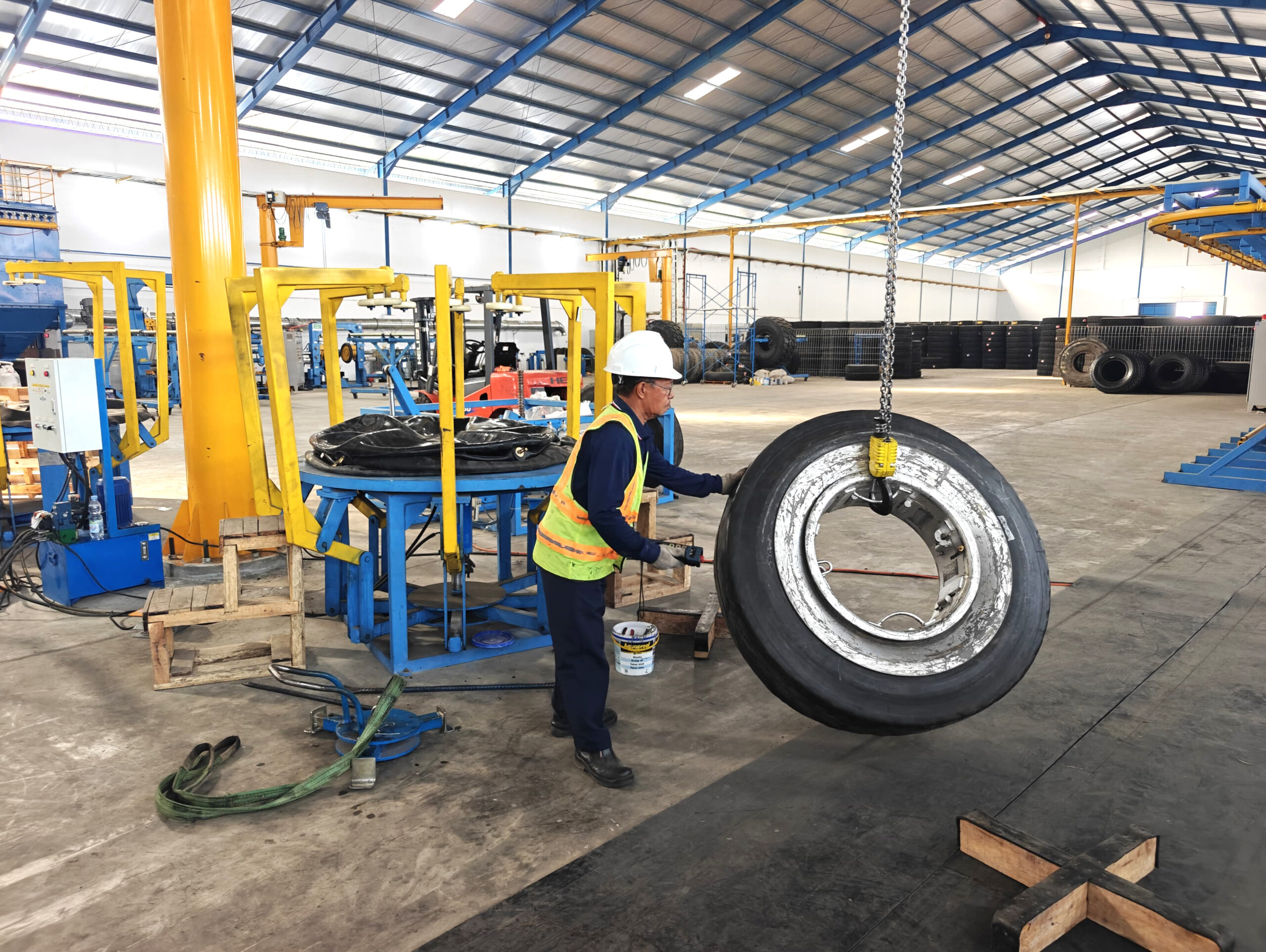
An earlier purchase had taught him how costly it can be to discover after delivery that a machine needs modification. For Makassar, the team specified what it wanted, monitored production, inspected the equipment before completion, and returned before shipment. Some minor changes were still needed during commissioning, but Chua wanted any substantial alterations made before the machinery left the supplier.
“You have to make sure that whatever you want is according to what you ordered,” he says. The process delayed delivery but gave Stamford Tyres greater confidence that the line could be adapted to its own retreading methods. The comparison, as he sees it, is between paying more for equipment that needs less buyer involvement and committing more time to specification and inspection at a lower initial price.
Machinery does not remove the need for experienced production staff. Chua says the Makassar operation still involves considerable manual work, particularly when an unfamiliar tyre or heavy tread presents a problem that cannot be solved by following a standard sequence.
He gives the example of a thick tread for an off-the-road tyre. Handling and bending it as a single piece has, in some instances, proved difficult. Chua says the production team adapted its building method to handle the heavy tread. Chua regards that kind of practical problem-solving as an essential retreading skill but a people skill. Without experienced people willing to adapt the process, he says, an unusual job can too easily be dismissed as impossible.
Local employment also influenced Stamford Tyres’ approach to automation. Chua believes an investor should provide work for people around its facility, alongside meeting the plant’s production needs. He does not rule out further automation but says a fully automated line was not the objective in Makassar.
The Next Stage
When asked whether the Makassar investment might be followed by another Indonesian factory, Chua’s answer is cautious. A third Indonesian plant is not under consideration for now. Stamford Tyres first needs to raise production from the facility it has built and develop the customer programmes intended to support it.
His outlook depends partly on mining activity recovering. More production at customer sites would mean greater tyre use and, eventually, more casings. It also depends on Stamford Tyres persuading fleets to use the full service it is assembling, from the first tyre purchase to the retread and its subsequent performance record.
“If all this comes, all the factors put in place, maybe within two or three years, we will reach our maximum capacity,” he says. It is a forecast with several conditions attached, rather than a production target he expects to meet automatically.
Chua remains positive about retreading in Indonesia. He recognises the pressure from cheap new tyres and the difficult start in Makassar but sees an opportunity for an operator that can collect sound casings, apply the right skills, and demonstrate value over more than one tyre life. The plant’s first months have made those requirements more immediate. They have also sharpened Stamford Tyres’ focus on the service it set out to build.