
The publication of updated consolidated texts for UN Regulation 108 and UN Regulation 109 in the Official Journal of the European Union on 6 March 2026 marks a refinement of the regulatory framework governing the retreading specifications. These updates formalise product classifications, mandatory sidewall markings, and conformity of production requirements, providing greater clarity for production units and fleet managers.
Commercial Tyre Classifications and ASP Requirements
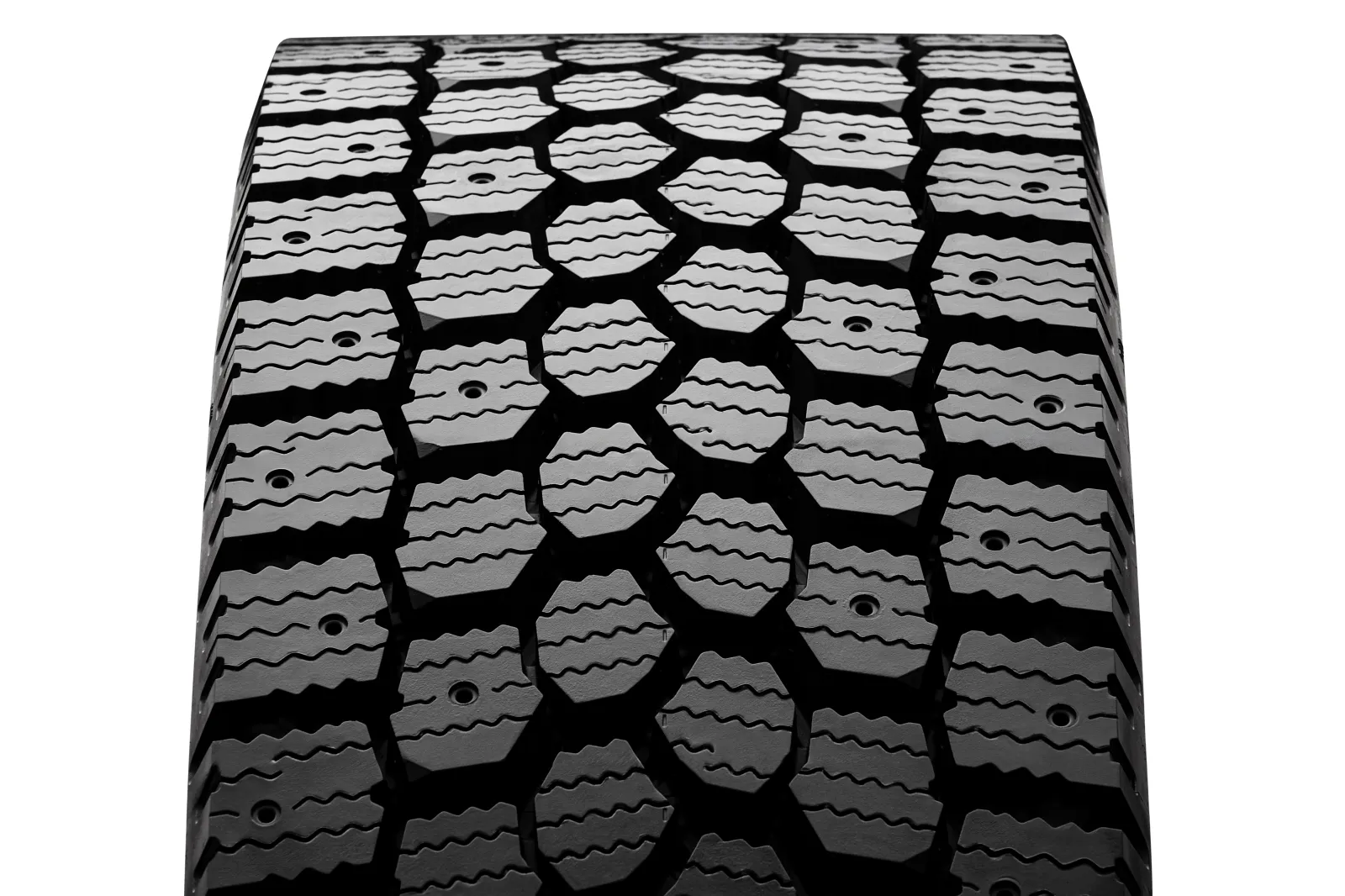
For commercial tyres, Regulation 109 now explicitly codifies specific tyre types and their corresponding sidewall markings. Key designations now embedded in the regulatory language include TRACTION for retreads intended primarily for drive axles, FRT for free rolling tyres, and ASP or OUTSIDE for tyres featuring additional sidewall protection on one side.
The requirements for Additional Sidewall Protection (ASP) tyres are now strictly defined. Where a commercial retread features this protection, it must be applied to one sidewall only and marked with both ASP and OUTSIDE. These tyres are limited to a maximum J speed index of 100 km/h. In dual mounting configurations, only one ASP tyre is permitted per pair, and it must be fitted in the outer position. For retreaders, these changes represent a tighter classification system and reduced ambiguity in the positioning of commercial retread products.
Regulation 108, which governs passenger-car and light-trailer retreads, has been updated to reflect contemporary tyre design and terminology. The regulation now incorporates the HL designation in the size designation for certain extra-load tyres, as well as ERS for Extended Radial Structure tyres.
Additionally, Regulation 108 now contains a formal definition of Extended Mobility Tyre (EMT) and includes the EMT symbol in the marking provisions. This establishes a performance benchmark of 80 km/h for 80 km in flat-running mode. By incorporating EMT terminology directly into the retread regulatory text, the updated version ensures that modern tyre design concepts are accurately reflected in a retreading context.
The updated texts provide precise quantification for annual conformity-of-production sampling, which directly impacts factory oversight and quality control. For Regulation 108, the annual sampling rate is set at 0.01% of total annual production, with a minimum of five tyres and a maximum of 20 tyres per year. For commercial retreads under Regulation 109, the rate is also 0.01% of total production, though the sampling range is set at a minimum of two tyres and a maximum of 10 tyres per year. These figures provide a solid practical comparison for light-vehicle and commercial retreading operations.
Beyond product specifications, the consolidated versions reinforce the retreading production unit’s responsibility. The texts make the compliance chain more explicit, stating that the retreader is responsible for ensuring the tyre meets the regulation, that repair materials and tread materials are properly documented, and that production remains in conformity.
This update reinforces the principle that retread approval is not solely about tyre design but also about the integrity of the factory system, documentation, and the repeatability of production standards. The move toward more granular product definitions suggests a shift from generic rules to a more product-specific regulatory environment, ensuring that retread approval remains explicit, standardised, and traceable at the production-unit level.
For the European retreading sector, a drive towards quality has always been a primary objective; however, it remains to be seen whether this level of regulatory granularity will work with the breadth of casing and retread configurations we see in the market today.