Portugal’s tyre retreading industry is increasing efforts to secure a stronger position within the national market as competition from low-cost imports intensifies and regulatory uncertainty continues to weigh on investment. While the sector remains resilient, future growth will depend on how effectively it can align with evolving sustainability demands and fleet economics.
Important Repositioning of Retreading
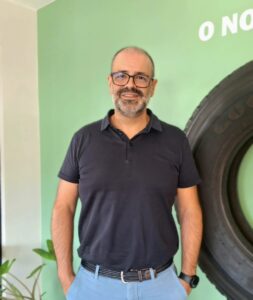
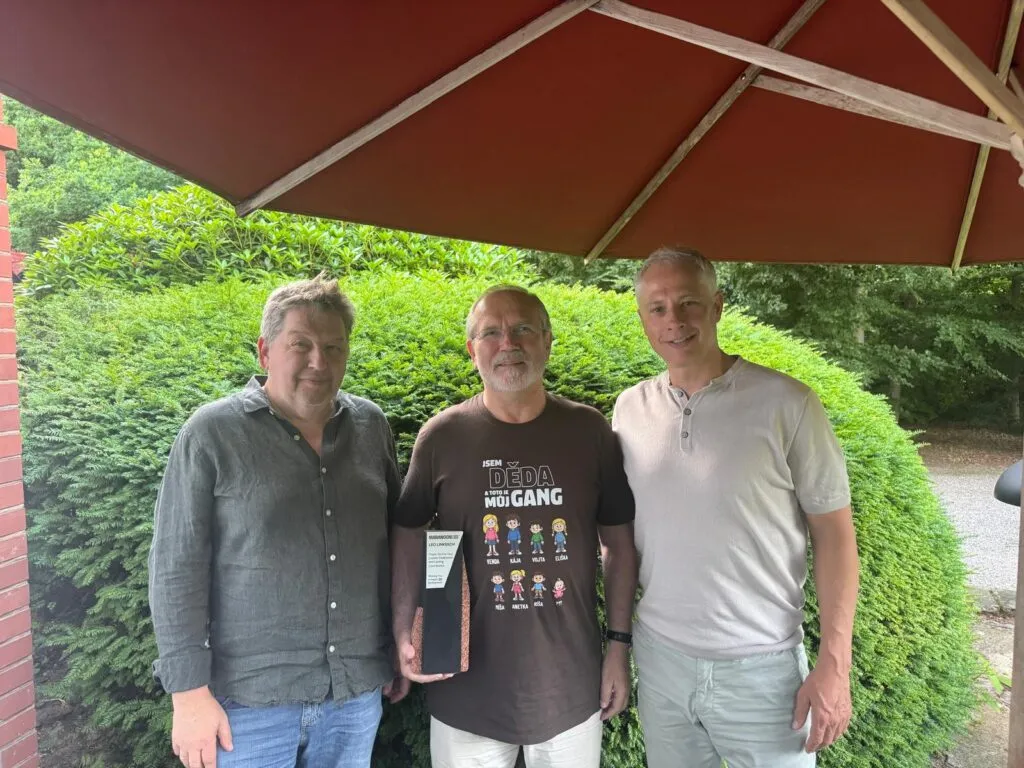
At the centre of this effort is the Portuguese Tyre Association (ARP), which is working to reposition retreading within both national policy and the broader European circular economy agenda. A key message from the sector is that retreading must no longer be viewed as a secondary market option, according to David Laureano, the newly appointed head of the ARP and CEO of Pneus do Alcaide, a Juncal-based tyre retreading company.
“My main priority is to ensure that retreading is treated as a strategic industrial and environmental activity, rather than as a secondary option in the tyre market,” Laureano said.
According to Laureano, the retreading industry has a legitimate claim to state support provided to green industries. “Retreading fits naturally within the circular economy because it extends product life, preserves raw materials, and reduces waste.”
To support this shift, the association has adopted a strategy to strengthen representation, improve regulatory conditions, and increase the visibility of retreaded tyres among end users. Simultaneously, attention is being directed toward regulatory developments, including Portugal’s ecovalor framework and updates to UNECE Regulations 108 and 109.
Additionally, the ARP is seeking to ensure that Portugal remains aligned with broader European developments in retreading, maintains links with international organisations, and contributes to regulatory discussions at the European Union level. This international alignment is considered essential in a market where regulatory changes increasingly originate at the European level and require coordinated implementation across member states.
Regulation and System Design Under Scrutiny
Engagement with policymakers remains central to the sector’s strategy, particularly in shaping the management of used tyres. As part of this push, the industry is seeking to move away from an exclusively end-of-life perspective.
“Retreading should be regarded as part of the environmental and industrial solution, because it extends tyre life and is aligned with the goals of prevention and efficient resource management,” Laureano said.
This approach reflects a broader debate within the waste management and recycling sectors, where emphasis is being placed on reuse and life extension rather than disposal and recovery. For retreaders, this means ensuring that tyres are not prematurely directed toward recycling streams when they still have value as retreadable casings.
Three key regulatory challenges have been identified. First, there is a need for greater predictability in applying the ecovalor framework to retreaded tyres. Second is ensuring that used tyre management systems preserve casings suitable for retreading. Third is adapting to evolving European homologation requirements.
“Ultimately, what we defend is that retreading should be treated as a strategic industrial and environmental solution, fully consistent with the circular economy,” Laureano said.
Market Pressures Intensify
The ARP is intensifying its efforts to bolster the industry amid mounting pressure on the Portuguese retreading market. The country has 19 retreaders within the Valorpneu network, while 13 companies are represented within the ARP.
This concentrated structure means that a limited number of operators carry the bulk of the industrial capacity, making sector-wide challenges, such as casing supply or regulatory costs, particularly impactful.
In recent years, competition has broadened significantly. “It is no longer just traditional competition between retreaders; it is also competition from low-cost new tyres, pressure from imports and, in some segments, a reduction in the availability of high-quality casings,” Laureano said.
At the same time, the European replacement market remained largely stable through 2025, particularly in the truck and bus segment, limiting organic growth opportunities. This combination of stable demand and rising competition has increased pressure on margins, pushing retreaders to differentiate themselves through service quality, technical performance, and long-term customer relationships.
Sustainability Driving a Shift in Demand
Looking ahead, the sector sees growth potential, though expansion is not guaranteed. “Growth will not happen by inertia. Above all, it will depend on how the market, regulators, and users themselves come to view sustainability in the transport sector,” Laureano said.
While much of the sustainability debate has focused on electrification and fuels, the industry argues that tyres remain an overlooked factor in fleet efficiency. “People often forget that tyres also have a direct impact on the operational and environmental efficiency of transport,” Laureano added. “A tyre that is well managed, well-chosen and, where technically possible, retreaded, can help improve vehicle efficiency, reduce waste, and increase the profitability of operations.”
This lifecycle perspective is expected to play an increasingly important role in fleet decision-making as cost control and sustainability reporting gain prominence. Increasingly, fleets are required to quantify their environmental footprint, and tyre management is emerging as a measurable contributor to emissions reduction and resource efficiency.
Fleet Attitudes Evolving
There are signs of change in customer behaviour, particularly among professional fleets. “Customers are more open today, especially professional fleets. The discussion is more mature than it was ten years ago because customers increasingly want measurable value,” Laureano said.
Key decision metrics now include cost per kilometre, casing performance, and service continuity. As Laureano explained: “Retreading benefits from that change because it responds well when the conversation becomes more technical and less emotional.”
This shift is supported by structured fleet management practices that monitor tyres throughout their lifecycle, enabling fleets to better understand the economic benefits of retreading.
The Casing and Labour Challenges
A critical constraint on future growth is the availability of suitable casings. “Without good casings, there is no strong retreading industry,” Laureano admitted.
The sector is focused on improving casing management from the tyre’s first life and on working with fleets to preserve retreadability. “In truck tyres, the casing rejection rate is normally around 30 per cent, which clearly shows how correct use and proper casing care are decisive from the very beginning.”
Beyond raw materials, labour is a structural issue, as Portuguese retreaders increasingly struggle to maintain a workforce. “It is clearly a structural challenge, and it is growing. The sector requires specific technical skills and consistent teams,” Laureano said.
The industry is calling for stronger technical recognition and improved training pathways to attract younger workers. Without a stable and skilled workforce, maintaining consistent quality standards becomes more challenging.
Company Perspective
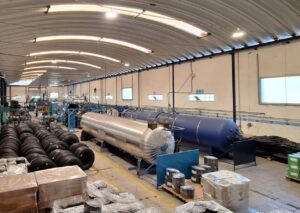
At the company level, operators are adapting by combining industrial capability with service-oriented business models. Pneus do Alcaide, founded in 1981, reflects this evolution from a traditional tyre retailer into an integrated operator spanning retreading, distribution, and fleet support.
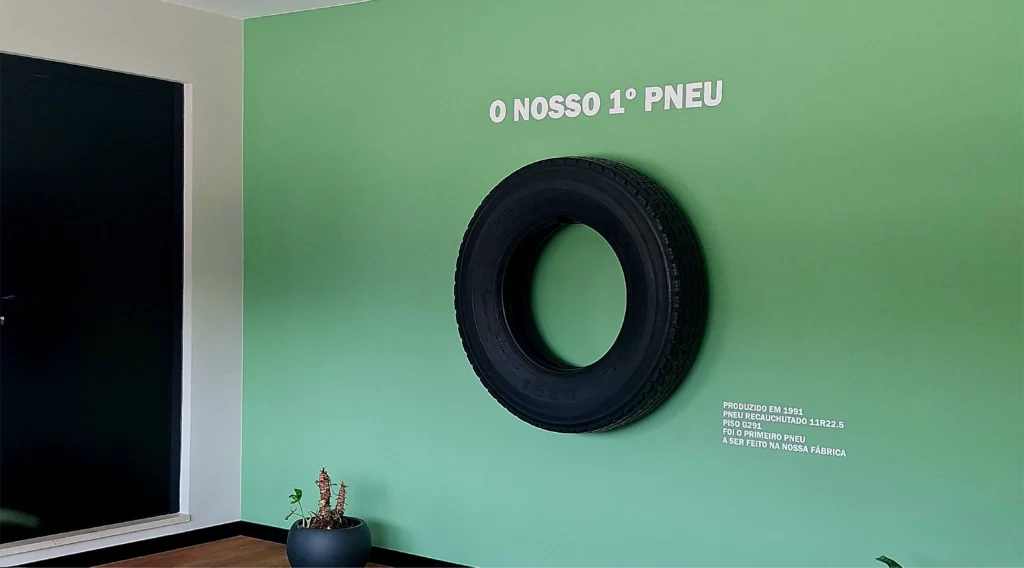
The company entered retreading in 1991 and has a long-standing collaboration with Goodyear Tire & Rubber Company. Pneus do Alcaide became an Official Goodyear Retreader in 1991 and adopted the Goodyear Ring System for truck tyres.
“A tyre should not be seen as a product with only one life, but as an asset that, when properly managed, can continue to generate value with safety, efficiency, and lower environmental impact,” Laureano said.
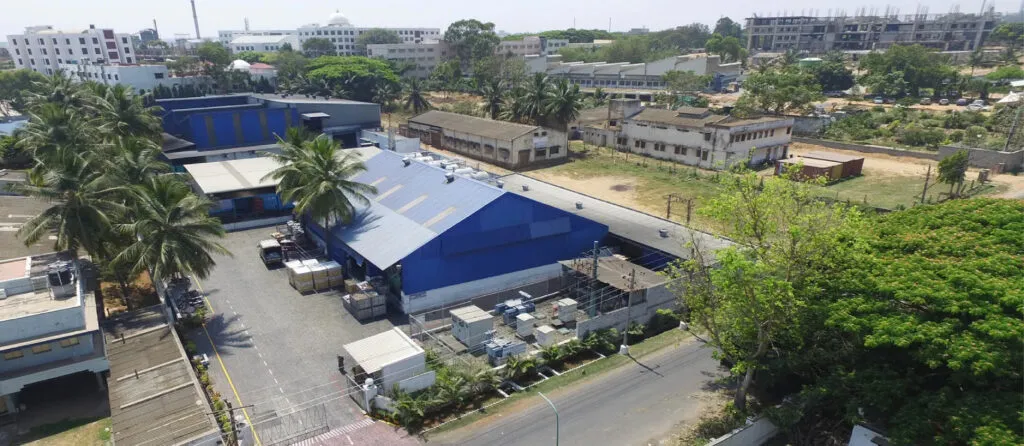
Today, the company’s retreading facility has a production capacity of approximately 12,000 tyres per year, serving primarily Portuguese professional fleets while expanding activity within the Iberian Peninsula.
In terms of materials and technology, the company has developed partnerships with suppliers, including Vipal Rubber Corp. As Laureano noted, supplier relationships are critical for maintaining quality standards, with the objective of working with partners that support continuous improvement in production and performance.
Beyond production, Pneus do Alcaide has strengthened its service offering through a partnership with Grupo Soledad to enhance service capacity and support for fleet customers via an integrated Iberian model.
Adaptability Will Define Winners
Across Europe, Laureano believes the retreading market will become more selective and technologically demanding. “What will distinguish the most successful businesses will not simply be size, nor even price. Above all, it will be adaptability and resilience,” Laureano added.
In an environment shaped by regulatory change, cost pressures, and evolving customer expectations, companies will need to anticipate trends. “Adaptation is not just about reacting when a challenge arises. It is about having vision, anticipating trends, preparing the operation, investing in people, improving processes, and being willing to adjust the business model whenever necessary.”
Ultimately, the sector’s future will depend on its ability to demonstrate economic and environmental value in measurable terms. “Those that can learn, adjust, withstand pressure, and continue creating value in a transforming market will be the ones that move ahead,” Laureano concluded.