The global tyre retreading industry is currently navigating a period of profound structural change, defined by shifting trade flows, geopolitical tension, and an increasing emphasis on the circular economy. It now seems there is a renewed focus in Canada on getting retreading back into the international conversation, thanks to RTS Canada.
Retreading in the Family
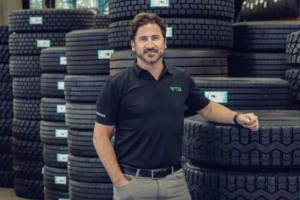
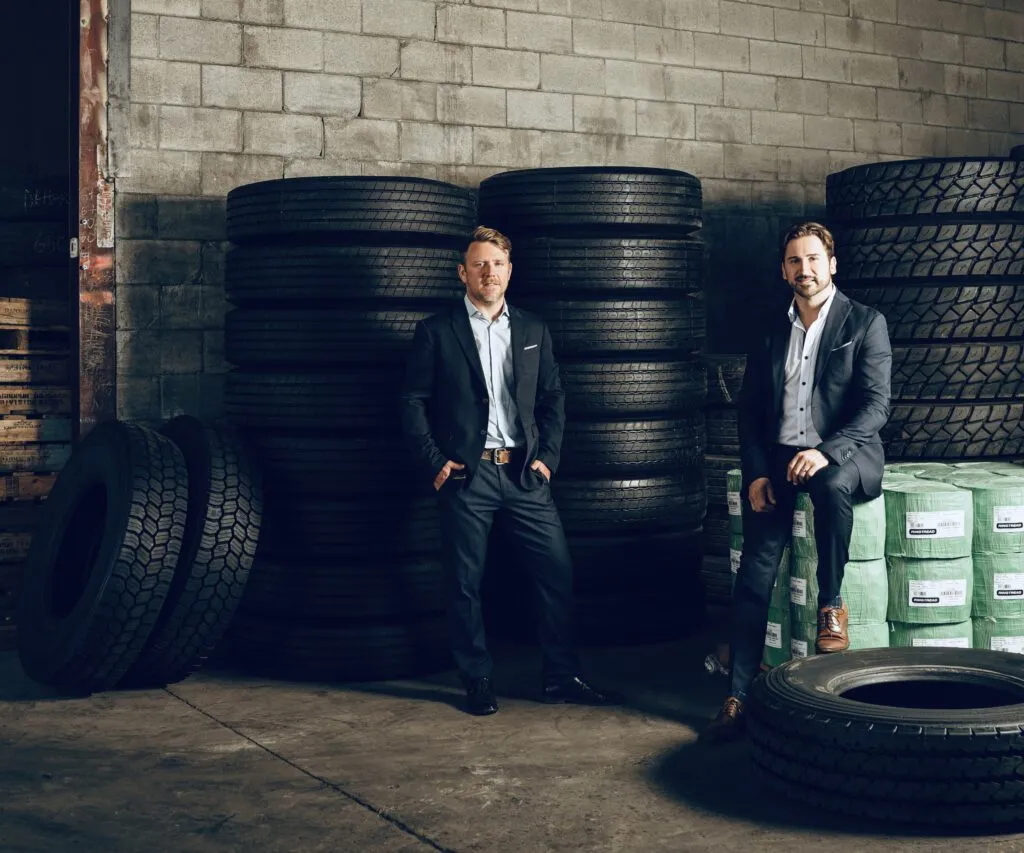
For Martin Collet, retreading runs in the family. Initially choosing a more corporate career, he found the tyre industry was sticky, and, like many others, he was drawn back into the field. He acquired Montreal-based RTS Canada in June 2022, along with his Ontario-based partner, Trevor Schotsman. His mission extends beyond simple ownership. His objective is to modernise the sector’s image in Canada and secure its future through a combination of operational excellence, a common-sense approach to evangelising the benefits of retreading, and rigorous collaboration with local and national governments. It’s clear from his drive and ambition that he has a good chance of succeeding.
Reflecting on why he would even consider purchasing a retreading factory, Collet saw a real opportunity: “I looked at the business and realised this is something I could get behind.” Retreading Business sat down with Collet recently to delve deeper into his thinking about RTS Canada, the state of retreading in Canada, and the progress he was making. “We are not only providing a smart, economical product, but we are doing the right thing for the environment. It is unbelievable that we have gotten to a point where we are just letting the sustainability of this industry fall apart.”
Collet’s entry into the industry was not accidental. His background is rooted in the trade, with his family having acquired West End Tire, a retreading facility in central Canada, in 1992. “I was 12 years old when they made that acquisition,” he recalled. “I grew up with Hawkinson retreading—a mould-cure process that, frankly, had a horrible finish. About ten years later, they introduced Marangoni into the system, and that completely changed the game.” After a successful 23-year career in the corporate transportation sector, leading sales teams for major heavy-truck component firms, the opportunity to acquire RTS Canada represented a return to his roots.
The Ever-Present Deluge of Low-Cost Imports
A primary concern for North American retreaders is the volume of low-tier, non-retreadable tyres entering the market. Collet noted that the situation in Canada has been exacerbated by US trade policy. When the US increased tariff rates on Southeast Asian imports to 25%-150% (now 50%-90% depending on the origin), significant amounts were diverted to the Canadian market.
“It has created an absolute ‘gong show’ of cheap imports,” Collet observed. “I am on an Alibaba list just out of curiosity, and I have seen 11R22.5 tyres listed for as low as $42 US. I can’t imagine this is sustainable for them, but they would rather settle for 10 cents on the dollar by dumping them here than get absolutely nothing. Distributors are, unfortunately, part of the problem as well. This model allows them to avoid responsible casing management altogether, shifting the full burden and cost onto the province and its citizens rather than supporting the circular economy.”
The impact on casing pools has been stark. Historically, RTS Canada reported that Chinese-manufactured casings accounted for approximately 15% of its production. By 2023, that figure had risen to 45% and is now at nearly 60%. While some of these tyres pass initial inspections and shearography, Collet questioned their long-term durability and their place in a sustainable model. “The problem is, will they last the test of time? Can they be retreaded a second or third time? If not, we are just creating more waste, unfortunately, far earlier than necessary.” Despite retreading’s undeniable environmental credentials, Collet argued that the industry has historically failed to integrate into the broader sustainability conversation. To combat this, he has developed a carbon calculator to provide fleets with empirical data on raw material reduction and carbon impact.
The Ontario Crisis and Regional Disparity
The Canadian regulatory landscape remains fragmented, with each province managing tyre stewardship independently. Collet highlighted a significant disparity between Quebec and Ontario. The Quebec eco fee is $6, while in Ontario, the province charges a $15 eco fee for each commercial tyre and reinvests a portion of those fees through retreading incentives.
“Ontario’s system creates a larger price gap, making retreading more attractive to the end user, but it’s not perfect,” Collet explained. However, Ontario is currently facing a massive collections crisis. In January 2025, the province reduced its tyre recovery targets from 85% to 65% as a cost-cutting measure. The result has been a stalemate; with targets met, many Producer Responsibility Organisations (PROs) have stopped collecting, leading to massive stockpiles at dealer sites.
“The government is complaining that collection costs are too high,” Collet stated. “Well, retreaders already cover the cost of picking up and delivering for their customers. Maximising retreading is the low-hanging fruit solution. If you encourage everyone to funnel through retreaders, who are the only qualified parties with the equipment to determine whether a casing has truly reached end-of-life or not, you solve the collection issue for at least the commercial vehicle-sized tyres almost immediately.”
“Politicians are often fascinated to learn that retreading even exists,” Collet said. “We are focusing on lobbying provincial and federal governments to ensure retreading is recognised as a primary solution for waste reduction. One significant development is the inclusion of tyres in the Canadian federal plastics registry. Following meetings with Environment and Climate Change Canada, Collet believes this transparency will highlight the minimal rubber consumption of retreading compared to new tyre manufacturing, especially the many highly toxic Chinese and Southeast Asian imports.”At least the data will be collected, and they can start making decisions and hopefully policies based on real data,” he noted. “We are not looking for subsidies; we just want a healthy and fair market to compete in. If the government takes no action, they will have killed this established, sustainable and job-creating industry and eventually realise too late how important it was—then they’ll have to subsidise the hell out of it to get it back.”
The Case for Centralised Sorting
In Quebec, a one-year pilot project with RECYC-QUÉBEC and RTS Canada revealed that 58% of tyres destined for shredding were actually suitable for reuse or retreading. Collet continues to communicate and share industry intelligence with RECYC-QUÉBEC, which he notes has been very supportive and collaborative. While nothing has yet been formally defined or decided, discussions are underway to explore both short- and long-term reuse solutions for the province. RECYC-QUÉBEC has also expressed interest in larger-scale, innovative concepts, such as a potential provincial centralised sorting system inspired by models like REGOM in France. However, conversations remain in the early stages.
“Currently, end-of-life is often determined by fleets or individuals who do not have the equipment, expertise, aren’t interested in casing management, or just don’t care about the environment,” Collet explained. “They decide it’s waste, call for pickup, and it gets shredded, regardless of whether that casing could have been reused two or three more times, generating significantly more economic and environmental value for the province. That is unacceptable. A centralised casing sorting system would provide both government and industry with accurate data while creating a safe, quality-assured casing bank for the market.”
Collet adds: “Like in other parts of the world, federal and provincial governments should lead by example and mandate the use of retreads for public fleets and contractors as part of environmental procurement policies. This would help fast-track the development of sorting centres to promote the reduction and reuse of precious resources.”
We need to see this type of common-sense thinking from retread companies across the world, not just in Canada.
Modernisation and the Perception Battle
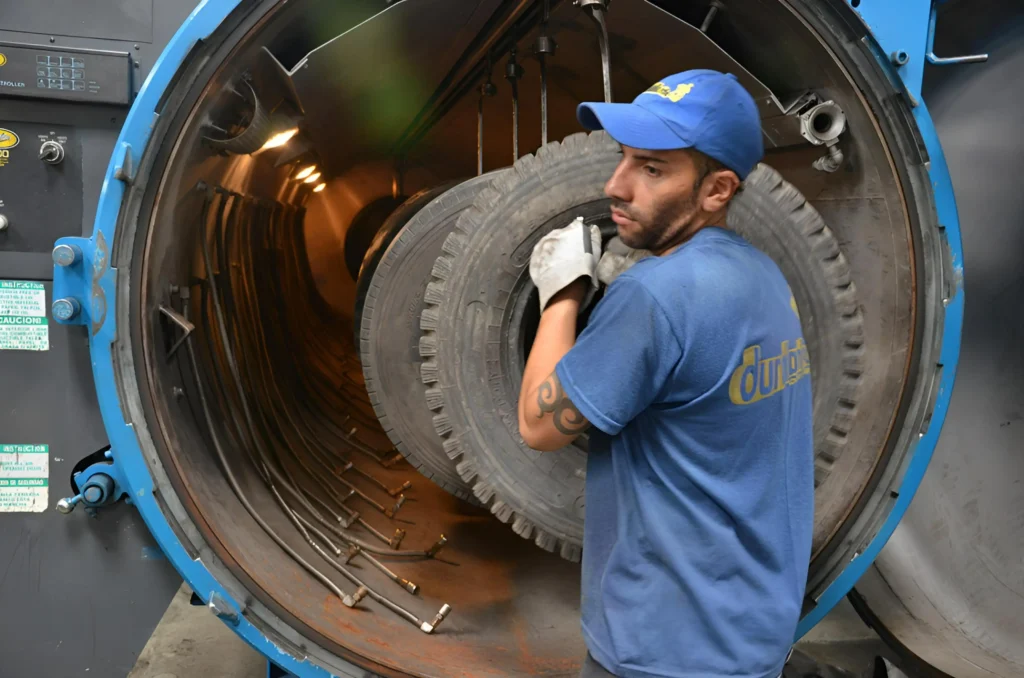
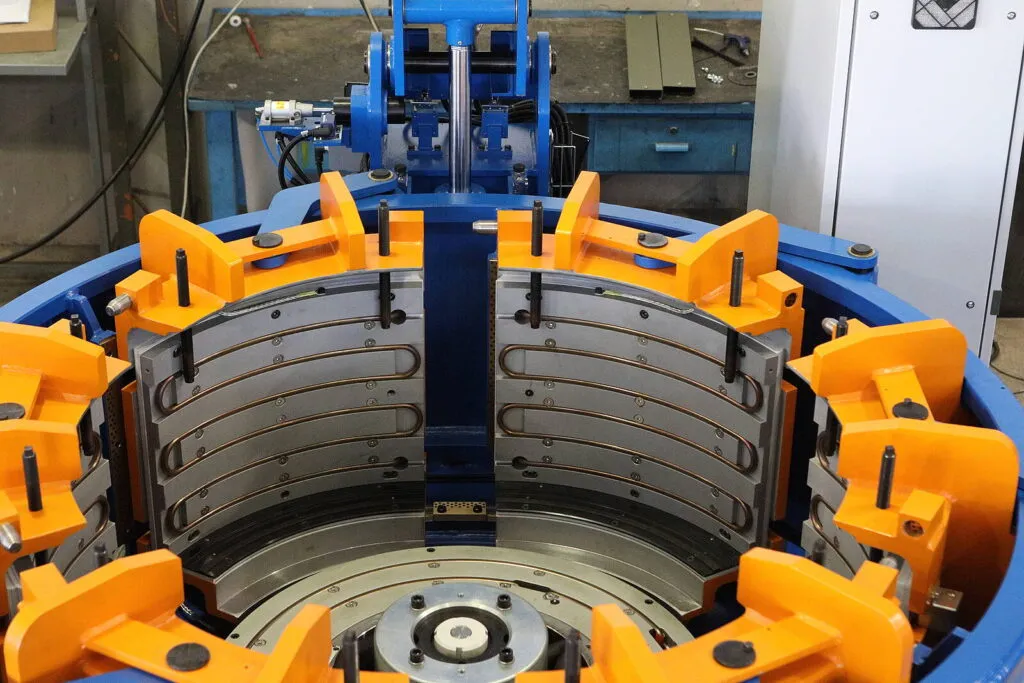
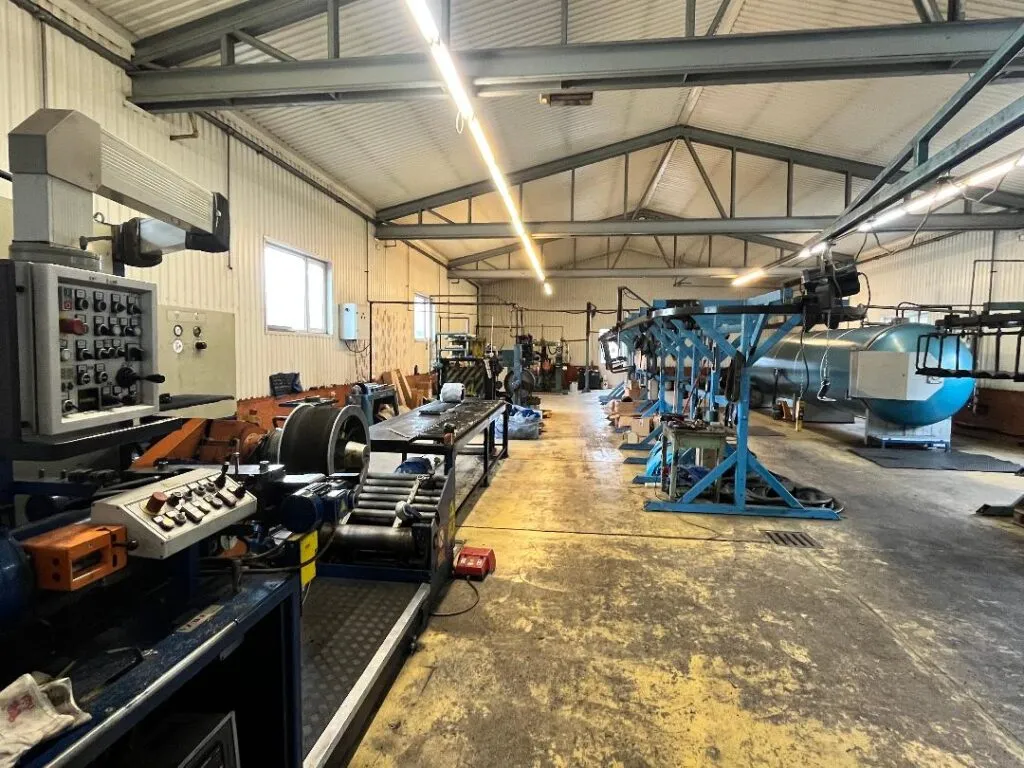
For Collet, credibility is inextricably linked to the professionalisation of the workspace. Since acquiring RTS Canada, the first Marangoni S.P.A. retreader in North America, he has focused on modernising the over 30,000-square-foot Montreal facility. This includes upgrading ERP systems to automate processes and a strong focus on quality control, including pursuing ISO certification. “If we want to be taken seriously by politicians and major fleets, we have to look serious,” Collet remarked. “We 5S’d the plant to make it look professional rather than a dark, dusty place. Credibility comes from seeing. It is also essential to recruiting and retaining talent.”
“Every single person, from a lawyer to a receptionist, says, ‘Oh, you’re the rubber we see on the side of the road,’ when you mention retreading. That simply isn’t true, and as an industry, we need to work together to demystify that misconception.” Collet stresses that quality and consistency are critical to building trust. “Retreading didn’t fail you; your retreader failed you. That’s why we’re pursuing ISO certification as a clear quality differentiator in the industry. We want to be able to tell customers: the issue wasn’t retreading itself, you just weren’t working with the right retreader.”
Collaborative Growth
Collet is also working closely with David Stevens of the Tyre Retread & Repair Information Bureau (TRIB) to increase the association’s presence in Canada. He is also collaborating with industry peers, such as Daryl Moore of KalTire and Louise Touzé of Michelin, to present a unified front to regulators.
“The goal is to benefit the industry as a whole,” Collet concluded. “By sharing successful global methods and fostering domestic cooperation, we can ensure that retreading remains a cornerstone of the Canadian transportation sector. Once these family-run, independent retreaders are gone, they are gone for good. We have to keep pushing to make sure we are always part of the conversation and solution.”
We haven’t heard much from Canada in recent years, but we’re sure we’ll hear more about developments in the near future. Collet and RTS Canada is the epitome of how retreading should be done right, from the process to the education and the collaboration with stakeholders and peers, it’s smart, measured, based in fact and driven by someone who cares.