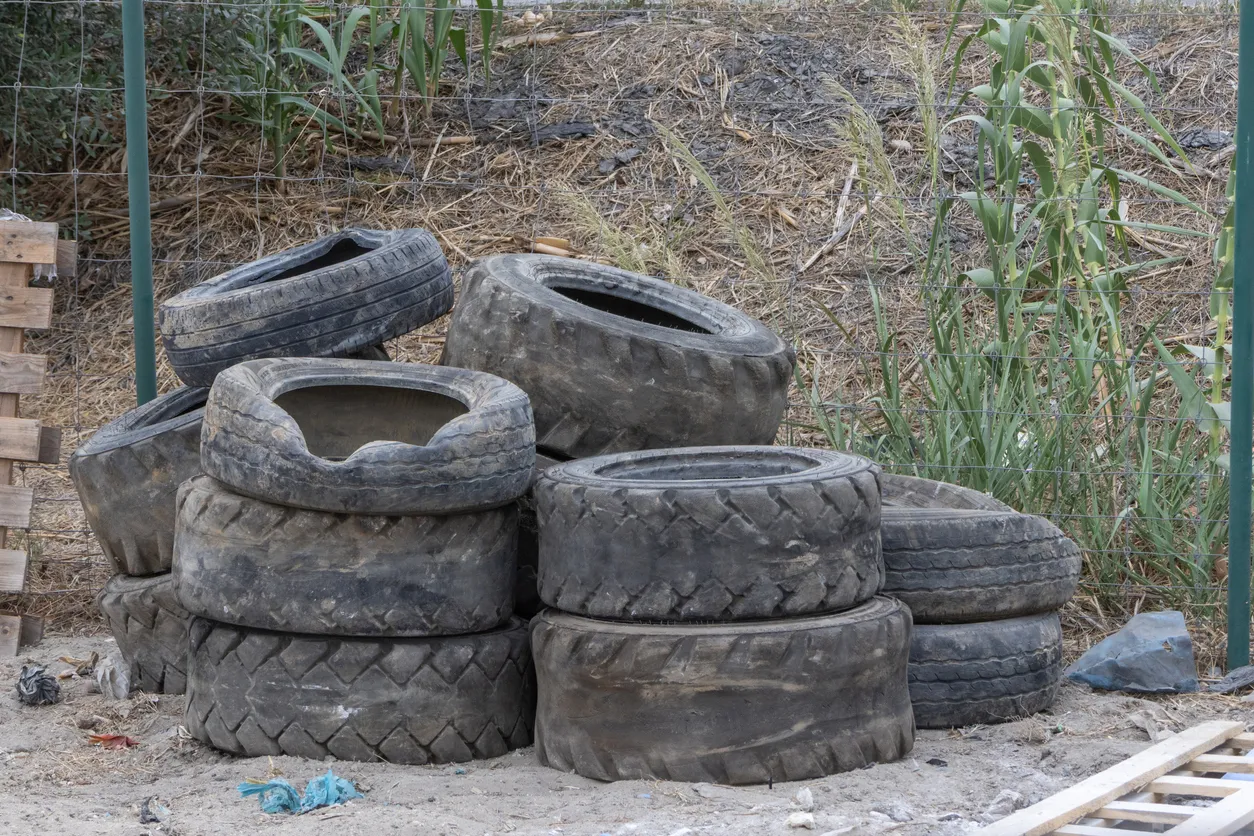
Yet again, it seems that Europe and some member states are intent on undermining the retreading sector. Regulatory shifts in Portugal have raised concerns about the introduction of new Ecovalor charges, which set identical collection charges at the point of sale for new and retread tyres. Not only does the argument continue that retreads should not be penalised in the same way as new tyres, but it also appears to conflict with European efforts to promote tyre life extension. This is not a new argument, but it seems to be a perpetual one, and it’s no different in Portugal.
The 2026 Portuguese Regulatory Landscape
Valorpneu, a non-profit limited liability company, is tasked with managing the collection and disposal of used tyres in Portugal. Three industry bodies own the organisation: Associação do Automóvel de Portugal (ACAP – Automobile Association), which holds 60 per cent; the Associação Nacional da Indústria de Recauchutagem de Pneus (ANIRP – Retreading Association), which holds 20 per cent; and the Associação Portuguesa da Indústria da Borracha (APIB – Rubber Industry Association), which also holds 20 per cent. It was established in accordance with a specific government decree to manage waste tyres better. Valorpneu collects an Ecovalor (eco-fee) for every tyre sold in Portugal, which goes towards the collection and effective disposal of end-of-life tyres.
Effective from 1 January 2026, the updated Ecovalor tables represent a significant departure from previous waste-management protocols for retreads. Since its inception in 2024, tyres resulting from domestic retreading and placed on the Portuguese market have been exempt from Ecovalor fees. This was framed as a voluntary 100 per cent bonus initiative implemented by Valorpneu to encourage sustainable retreading practices.
In 2024, the Portuguese government published a legal decree, Portaria n.º 150/2024/1, which aims to: “have an impact throughout the entire product value chain, promoting the optimization of its production, reuse, recovery, and utilization at the end of its life, so that it can be reintegrated into the economy on a larger scale, thus adding value to secondary raw materials”. As part of this, tyres of different sizes were subject to different upfront charges, added to the sale price, ranging from €0,24 for a motorbike tyre, up to €18.60 for an agriculture tyre, including €1.76-8.97 for commercial vehicle tyres. As of 2026, this now applies to new and retread tyres; however, there is a slight mandated reduction in the bonus to 10 per cent. This change effectively requires the payment of 90 per cent of the standard fee for retreaded tyres, ending the original voluntary exemption.
Climénia Silva, Diretora Geral of Valorpneu, clarified the situation:
“Meanwhile, to make the differentiation of Ecofee mandatory for all waste streams, the government published a legal decree that forced the application of 10% of a bonus for retreaded tyres (and not 100%). Valorpneu immediately protested against what was established in this legal decree and proposed an amendment to reinstate the practice that had been followed for the past 6 years with several insistences, without the amendment having been accepted so far by the government.”
Silva noted that Valorpneu was not the promoter of this change and remains opposed to it, arguing that the new rules create a significant setback for circular economy objectives. Despite the organisation’s formal protests, the government has not yet accepted any amendments to the decree.
While the preamble to Portaria n.º 150/2024/1 explicitly praises the circular economy for its ability to prolong product lifecycles, the practical application of its framework appears to contradict these aims. By shifting the authority for fee calculations from industry-led management entities like Valorpneu to a rigid, government-mandated formula, the decree effectively caps environmental bonuses at 10 per cent. This technical adjustment fundamentally alters the economic viability of retreading in Portugal, as it replaces a system that prioritised reuse with a standardised levy that treats retreaded products almost identically to new imports for waste management obligations.
The new charges present a significant financial challenge for the Portuguese retreading industry, which currently includes 19 registered Valorpneu partners. Critics argue that this policy effectively penalises the most sustainable option in the tyre lifecycle.
Under the 2026 rules, Valorpneu requires the Ecovalor to be explicitly itemised on all invoices. The revenue is intended to finance the Integrated Used Tyre Management System (SGPU), covering reception centres, temporary storage, transport, recycling, and research and development activities.
However, applying the fee to retreaded products suggests a cumulative cost burden. For example, a 295/80R22.5 casing purchased as a new tyre and subsequently retreaded twice could incur a total cumulative Ecovalor cost of €25.11. Within this total, €16.14 represents new costs that did not previously apply to the two retreaded lives of that specific casing; this could be the difference between retreads being competitive and not.
This development also appears to conflict with the European Commission Waste Framework Directive, which establishes a waste hierarchy prioritising prevention and reuse over recycling. From a technical perspective, skipping the retreading phase and proceeding directly to recycling shortens the casing’s service life, resulting in the loss of material, energy, and economic value.
Solidarity from the Spanish Retread Sector
The Asociación Española de Neumáticos Reciclados (AER), which alerted us to this development, has expressed formal solidarity with ANIRP and the wider Portuguese sector. AER suggests that this change creates a clear disadvantage for three primary reasons. First, it increases the end cost of retreaded tyres, reducing their competitiveness against new alternatives. Second, it signals a preference for industrial recycling by charging for the highest circular-value option. Third, the requirement to itemise the fee on invoices makes this extra cost highly visible, potentially harming commercial acceptance among fleet managers and professional customers.
Adrián Fernández Monge, Secretary General of AER, notes that while the legal alignment with EU law is complex, the measure is fundamentally inconsistent with the waste hierarchy principle. Monge points out that, as of 1 January 2026, the fee is perceived as an additional burden because it is effectively levied on the same casing multiple times, once at its initial entry to the market and again after each retreading.
The situation in Portugal contrasts with the model employed in Spain. In the Spanish market, the eco-fee is linked exclusively to the first placement in the replacement market. Spanish regulation identifies a producer as anyone manufacturing retreads using imported casings or anyone importing finished retreaded tyres. Retreading carried out on a casing that has already been placed on the national market is not subject to additional financial obligations.
Monge clarified that the decision to implement these charges in Portugal was not a unilateral move by Valorpneu. Instead, the system operates under a licence and calculation model approved by public authorities, including the departments for economy, environment, and energy.
AER has called upon the authorities in Portugal and the system managers to urgently review this approach. The association proposes either restoring the zero-fee status for domestic retreading or establishing a compensation mechanism to neutralise the economic effect on reuse. AER argues that system financing must be maintained without creating competitive disadvantages for efficient, circular solutions.