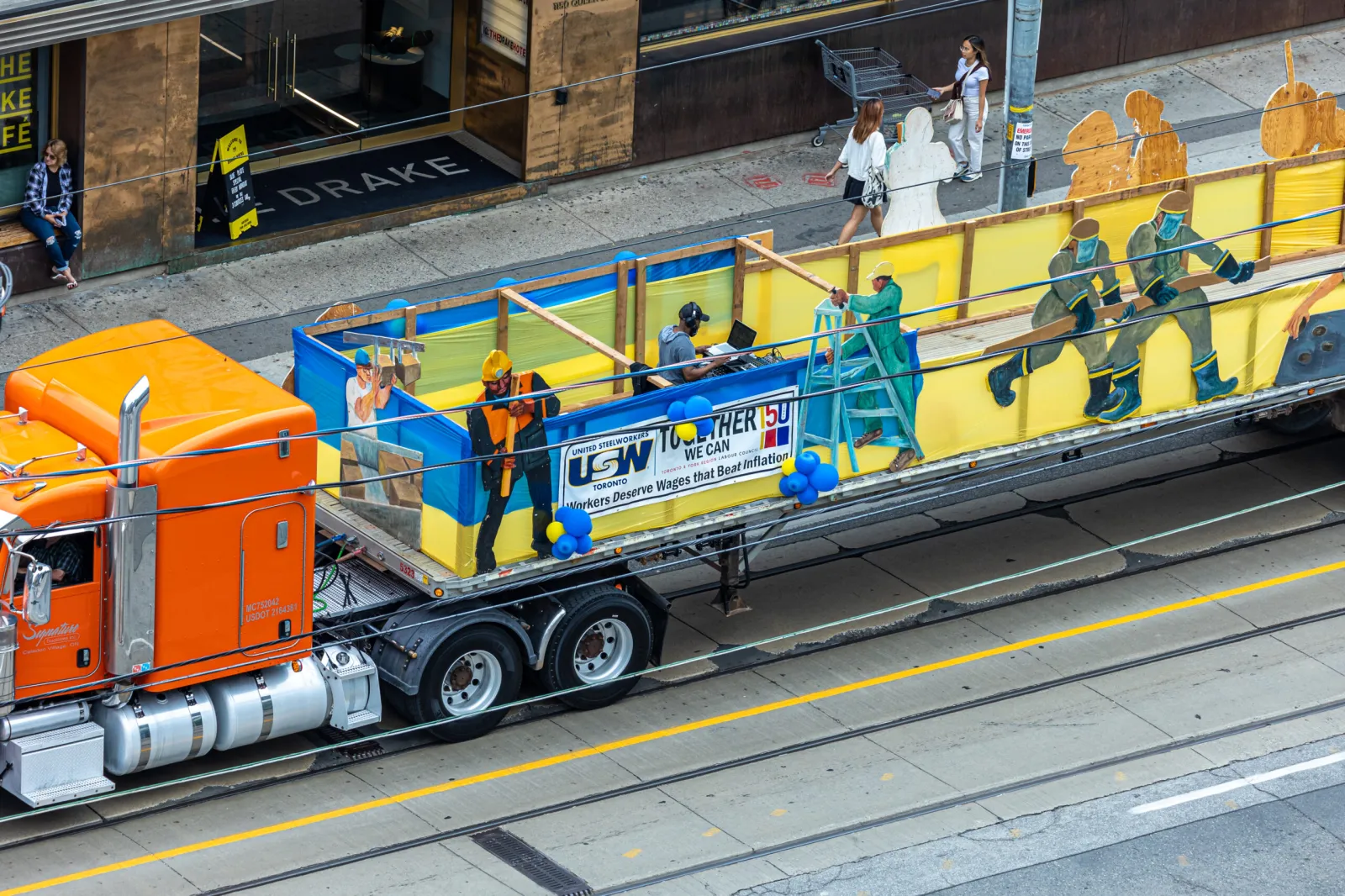
In a show of support for the tyre industry, and shedding some interesting light on the situation surrounding tyre imports from Asia, the United Steelworkers (USW) has called on United States Trade Representative Jamieson Greer to initiate a Section 201 investigation into tyre imports, arguing that widespread plant closures, falling domestic production, and growing import penetration require a broader response than existing product and country-specific trade measures.
Inter-Industry Support for Tyres
In a letter dated 14 September, USW International President, Roxanne D. Brown urged the United States Trade Representative (USTR) to seek an investigation under Section 201 of the Trade Act of 1974, with the union calling for measures to limit imports and support domestic tyre production.
“The domestic tyre industry is in crisis,” Brown said in announcing the request. The USW said US tyre production has fallen by roughly 40% since 2000 and pointed to nine plants that have fully or partially closed, or announced closures, since late 2024. According to its accompanying industry overview, approximately 7,550 jobs have been, or are expected to be, affected.
The facilities cited by the union include Sumitomo’s former Tonawanda plant in New York, Bridgestone’s LaVergne truck and bus tyre facility in Tennessee, Michelin’s Ardmore plant in Oklahoma, and Yokohama plants in South Carolina and Virginia. The overview also includes workforce reductions at Goodyear’s Danville plant and announced closures involving Titan Tire in Jackson, Goodyear in Fayetteville, and Michelin in Tuscaloosa.
USW argues that existing anti-dumping and countervailing duty measures have increasingly been followed by shifts in production and sourcing to countries not covered by the relevant orders. The letter specifically points to rising shipments from jurisdictions including Serbia, Cambodia, and Peru, stating that imports from some markets have increased by as much as 429%. It also says Chinese tyre companies have opened 17 plants across seven countries since 2013, including Cambodia, Indonesia, Malaysia, Morocco, Serbia, Thailand, and Vietnam.
The union is therefore seeking a measure considerably broader than another country-specific anti-dumping case. Its proposal would cover passenger vehicle and light truck (PVLT) tyres, truck and bus tyres (TBT), off-the-road (OTR) tyres, and aircraft tyres.
Of particular interest is the form of relief being proposed. The letter says any eventual measures should include “graduated import limits” alongside policies intended to retain and expand US production, including support related to capital costs and preferential procurement strategies.
The accompanying figures illustrate the scale of the change claimed by USW. For PVLT tyres, imports increased from 189.8 million units in 2021 to 214 million in 2025, while estimated domestic shipments declined from 116.6 million to 93.5 million. Imports consequently represented 69.6% of estimated US consumption in 2025, compared with 61.9% in 2021.
The shift was more pronounced in the truck and bus segment. USW’s figures show TBT imports rising from 17.5 million tyres in 2021 to 21.2 million in 2025, while estimated domestic shipments fell from 11.4 million to 7.9 million. Imports accounted for 72.8% of the market in 2025, according to the overview. The document says US tyre manufacturers estimated domestic TBT production fell by around 16% in 2025 alone.
The OTR picture is more complex. Imports declined by 8.6% between 2021 and 2025, but USW argues that domestic production contracted more sharply as demand weakened. The union also states that OTR imports increased by 11.4% during the first half of 2026, while several remaining US facilities have been operating below capacity.
USW also included aircraft tyres within its proposed safeguard action. Imports in this category rose by 6.1% between 2021 and 2025 before increasing by a further 20.5% during the first half of 2026. The union says only three US plants currently manufacture aircraft tyres and argues that maintaining domestic capacity has implications for both civil and military supply.
A Section 201 investigation differs from an anti-dumping or countervailing duty case because it does not require a finding of unfair trade. Instead, the US International Trade Commission (USITC) examines whether increased imports are a substantial cause of serious injury, or a threat of serious injury, to a domestic industry. USTR is among the bodies that can request such an investigation. If the USITC makes an affirmative determination, it recommends possible relief, while the President makes the final decision on whether measures are imposed.
USW said it wants the administration to move quickly, arguing in its letter that continued reliance on separate trade cases creates uncertainty for workers and manufacturers considering longer-term investment in US tyre production.
“We urge that you act quickly to stem the further loss of production and jobs,” Brown concluded.